13/345 Southport-Nerang Rd, Ashmore Q 4214
12/110 Kortum Drive, Burleigh Heads Q 4220

Managing Ingrown Toenails

Managing Ingrown Toenails

What is an ingrown toenail?

Ingrown toenail.jpg

An ingrown toenail is a condition commonly treated by the podiatrists at Gold Coast Foot Centres. Ingrown toenails occur commonly, but not exclusively, in one or both sides of the big toe nail where the nail edge pushes into the surrounding skin.  This can cause pain and irritation to the skin, and can often lead to infection if left untreated.

What causes an ingrown toenail?

There are a few common causes for ingrown toenails:

–       Incorrect trimming technique

ingrown+toenail.jpg

–       Trauma to the toe (stubbing your toe)

–       Tight fitting shoes

–       Poor foot hygiene

–       Picking at toenails

–       Fungal infections

Signs and symptoms

Ingrown toenail1.jpg

Common signs and symptoms of ingrown toenails include:

–       Pain around the edge of the nail

–       Redness and swelling around the nail

–       Clear/ yellow discharge

Treatment

Ingrown toenails are simple to treat if treated early. Once an ingrown toenail becomes red, swollen and infected it becomes a lot more difficult to treat. For this reason it is best to consult with one of our podiatrists as soon as you experience discomfort. It is not recommended that you treat your own nail if you suspect an ingrown toenail as incorrect trimming technique and unsterilized instruments can lead to further infection and pain.

toenail treatment.jpg

When the ingrown toenail is not too serious, our podiatrists can quickly and painlessly remove the offending nail spike. This simple procedure is completed in our clinics using a special instrument to trim the nail and will reduce your pain immediately.

For more severe or reoccurring ingrown toenail cases a safe and effective procedure can be completed in our clinics. This is called a partial nail avulsion and can provide a more permanent solution for ingrown toenails. Our podiatrists use local anesthetic so no pain is felt throughout the procedure.  Patients only require the rest of the day off work, and can return to work the next day.

For more information on how Gold Coast Foot Centre Podiatrist can help you with your ingrown toe nail, visit Nelson or Ben for a consult at either our Runaway Bay or Burliegh clinics. Phone 07 5500 6470 to book.

Lets Talk About “Core Stability” for athletes: What is it  & how does it make you perform better?

Lets Talk About “Core Stability” for athletes

What is it  & how does it make you perform better?

By Britt Caling, APA Sports Titled and Australian Olympic Team Physio, 2016

While Elite Athletes are constantly aiming for improved performances, this motivation is also found in age-group, masters and social athletes of all levels and across all sports – I dare you to disagree!

There are many factors that need consideration if you want to improve your Sports Performance: – improving your skill of performance (whether that be run technique or efficiency, cycle, swim, paddle technique etc),- remaining uninjured and illness-free so you can train consistently over a period of time. This in turn requires finding the ‘sweet spot’ of training volume and the right variations of training load- increasing all components of your “fitness”, that is, speed, power, agility, flexibility, balance, strength and “core stability”. This is usually achieved via strength and conditioning (S&C) gym-based programs or home exercises.Core Stability exercises are invariably included in programs to make athletes better/faster/stronger.

But what really is “Core Stability”? And does it actually help you perform better?

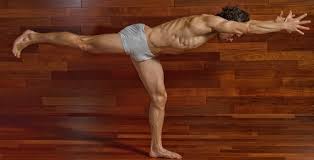
The concept of our ‘Core’ means different things to different coaches, trainers, health professionals and even researchers. Much of the gym industry presents the image of our ‘core’ being our abs, with the idea that doing lots of crunches and abdominal bridge/plank holds will improve our ‘core stability’. This is a very limited view, and in fact, in some cases may be detrimental to sports performance if it creates patterns of bracing, breath holding and other movement patterns that are not specific to your athletic pursuits.

The original concept of core stability was actually morphed from an idea of spinal stability represented by the work of Panjabi in 1992 and then later Jull, Richardson & Hodges from the University of Qld. Panjabi was a mechanical engineer and biomechanist from Yale University who analysed how the spine moved using Cadavers. His work proposed that the lumbar spine (low back) was stabilised in neutral positions by the interaction of passive elements (such as joints and ligaments that join bone to bone), active elements (muscles and tendons that connect muscle to bone) and neural elements (our Brain and nervous system control of the muscles).

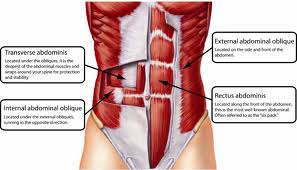
Within the elite sport strength and conditioning profession, the ‘core’ is typically  referred to as any musculoskeletal structure  that  is  encompassed  by  the  abdominal  and  lumbar spine  regions (including  the   transversus   abdominis {deepest abdominal layer},   internal   and   external obliques,  rectus  abdominis,  quadratus  lumborum back muscle, multifidus deep small back muscle, gluteus  medius and  maximus,  pelvic  fioor  muscles, and  the  diaphragm). An athlete’s ability to contract these muscles and stabilise joints during movement – as well as limit unwanted movement – is referred to as control and stability.

Elite S & C coaches will tend to focus on contraction and connection of the limbs to this ‘core’ to improve movement efficiency and therefore sports performance. The definition of Core Stability that I believe relates well to sports performance is that given by Kibler and colleagues in 2006: which is ‘the ability to control the position and motion of the trunk over the pelvis and leg to allow optimum production, transfer and control of force and motion to the terminal segment’. If we therefore consider that ‘Core Stability’ is the ability to position and use the torso, trunk and pelvis as a stable base so that the arms and legs can efficiently produce force to move and propel us, then we should be able to understand that improving our ‘core stability’ should make us more efficient athletes and help us perform better. Better ‘core stability’ should allow us to produce more force at the end of our limbs, ie to push harder into the ground when we run which will propel us forwards better, or allow us press better on the water when we swim, and have less wasted energy (ie less loss of force transfer from our body positioning our paddle in the water to the propulsion forwards by pressing the paddle against the water, or less sideways movement of our pelvis on our bike saddle means more force to push into the bike pedal to again propel us forwards faster).

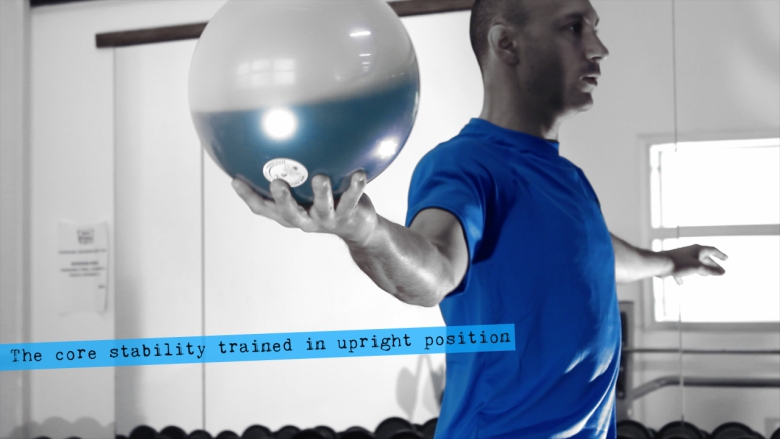
Given this understanding, we need to move away from the concept of using a generic set of exercises (such as abdominal plank/bridge holds or fit ball balance exercises) to improve core stability and sports performance. Core stability exercise programs for athletes need to focus on:

– Improving body  proprioception- understanding how and where to position parts of the body for optimal force production and muscle recruitment, and understanding how to reduce the effort used in movement (note how the best athletes in their sport always make what they do seem “easy”),

– Improving the ability to maintain a good, and stable, position of torso, trunk and pelvis with different movements of the limbs – Developing ‘reactive’ stability of the athlete. That is, the ability of the body to react to unexpected forces without using excess/unwanted muscle contractions and movements.

– Being specific to the athlete’s sport, or weaknesses of the athlete, in relation to the sports skill.

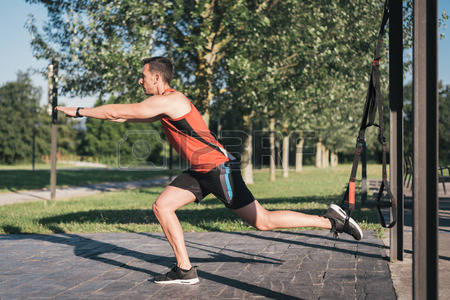
The research tells us that only core stability exercise programs that are really specific to the demands of the sport will produce performance improvements. While completing a series of abdominal crunches and fit ball balance exercises has been shown to improve the ability to do crunches and balance on a fit ball (plus give you nice hard-toned ab muscles), this alone does not translate to racing or performing better/faster/stronger in your sport. As an example, a cyclist aiming to improve their time-trail performance would be better performing deep lunging-based exercises, with progression to split jump exercises, where they focus on maintaining good pelvis and trunk position rather than doing squats on a fit-ball.

So the next time you are doing your “core stability” exercises, consider how specific they are to the technique and skill requirements of your sport. Ask yourself what your racing, competition or sports performance weaknesses are and then talk to a strength and conditioning coach, a trainer, or a sports physio that understands your sport.  Don’t waste time doing a core stability exercise program that is not going to ultimately help improve your sports performance.

Britt xx

Chicken & Veggie Massaman Curry

By Eatsmart Nutrition

Serves 4

Ingredients:

500g chicken breast, diced

1/2 a jar of massaman curry paste

1 can coconut cream

3 cups of vegetables chopped (we used cauliflower, broccoli, sweet potato, pumpkin and carrot)


Method

1. In a large sauce pan, heat a small amount of oil and add curry paste. Heat until fragrant, about 3 minutes.

2. Add chicken, and cook until coated in paste and browned

3. Add coconut cream, then add around half a can of water.

4. Add in hard vegetables – pumpkin, sweet potato and carrot and simmer for 15 minutes.

5. Add remaining veg and cook for a further 5-10 minutes until vegetables are cooked.

6. Serve with brown rice, or the quinoa, barley and lentils protein blend.

Why schedule a deep tissue massage?

written by Mathew Ptak-Zylka, RMT, Myotherapist at Gold Coast Physio & Sports Heath

Why schedule a deep tissue massage?

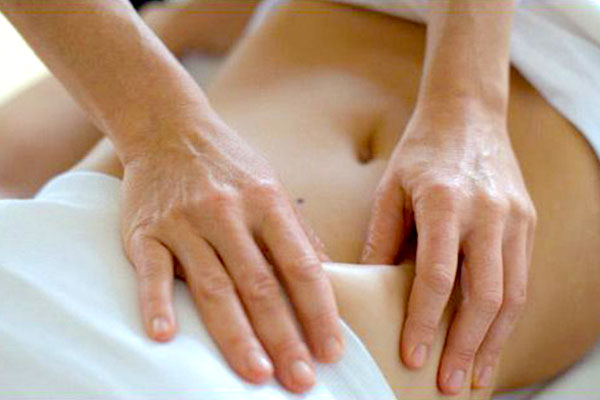
Massage BurleighIn order to enhance overall recovery time, a deep tissue massage is often recommended ideally a few days after physical activity because it can target key problem areas before they become troublesome.

During a deep tissue massage, the therapist applies acupressure, trigger-point work (focused on all those tiny muscle knots) and “deep transverse friction” where scar tissue is broken by back and forth movement over muscle.

There are several benefits to deep tissue massage. These include:

Reduced pain and recovery time

In a study published by the journal Science Translational Medicine, 11 men were exercised to exhaustion and given 10 minute leg massages immediately afterwards. Following an analysis of the recorded muscle biopsies prior, during and after the workout, scientists discovered that the massage prompted the production of mitochondria, an energy cell that builds muscle, boosts recovery time and suppresses pain.

Improved flexibility and injury prevention

Burleigh MassageAthletes who receive regular deep tissue massages notice an increase in their range of motion because their therapist is actively breaking down all the tightness around the muscles.

Intense training or exercise can lead to a build-up of scar tissue, and the development of many adhesions where the muscle, fascia, and other tissues clump together causing stiffness, and subsequent vulnerability to injury. During a deep tissue massage, muscle fibres are stretched and scar tissue is broken down which promotes flexibility and agility.

Increased circulation

Massages increase blood circulation which enables the muscle to expel toxins and absorb fresh blood and oxygen.

Better sleep patterns

Sleep is a crucial part of the recovery process. Several studies have found that massage therapy induces better sleep and actually helps maintain consistent sleeping patterns. A deep tissue massage will reduce tension, induce relaxation, and enable clients to achieve greater sleep that can make him or her recover faster and perform better.

When should a deep tissue massage be booked?

Scheduling an appointment after a workout or run, preferably with a light workout or run planned for the next day is recommended. This helps out with recovery, and enables you to derive benefits from more intense physical activity 24 hours later.

Our team of experienced massage therapists has treated professional athletes, Olympic athletes and all active individuals along with everyday aches and pains including posture related injuries. To book a deep tissue massage contact GC Physio.

Reference:

McMaster University. “Massage is promising for muscle recovery: Researchers find 10 minutes reduces inflammation.” ScienceDaily. ScienceDaily, 1 February 2012. <www.sciencedaily.com/releases/2012/02/120201173226.htm>

Insight into life as the Lead Sports Physio to a National Sports Team

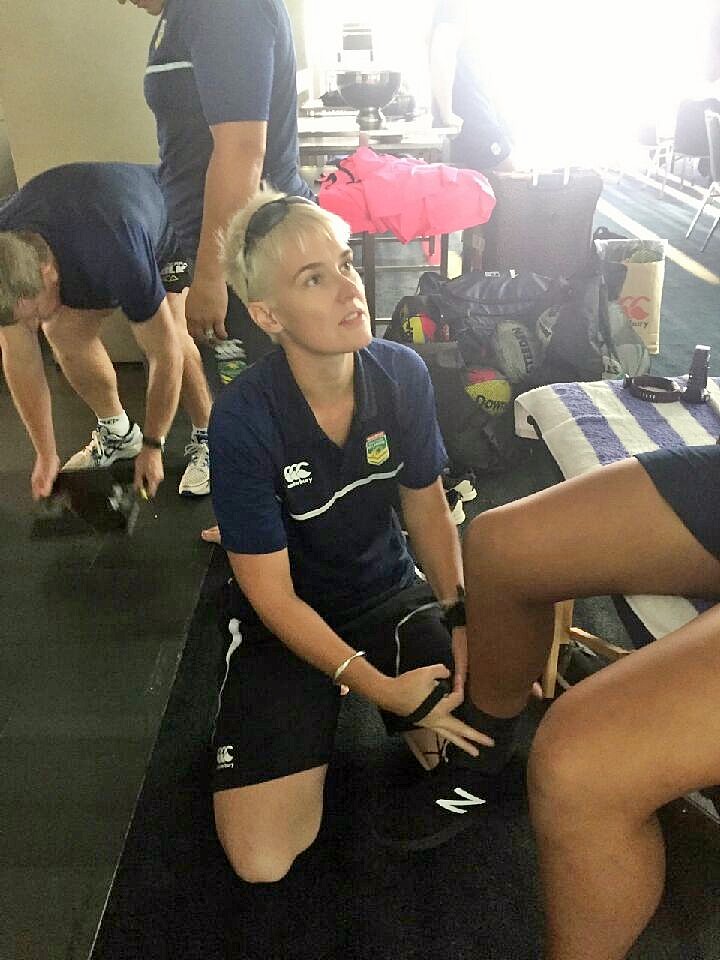
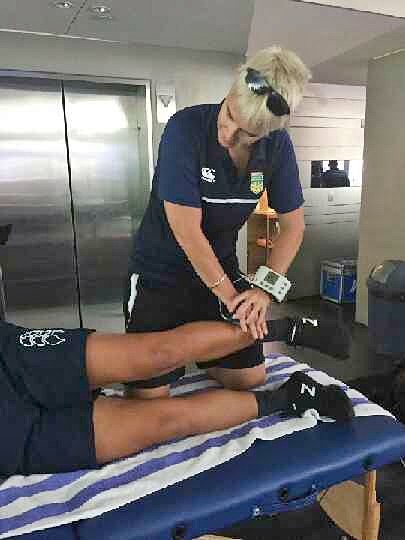
Physiotherapist Sam McLaren interviews GCPSH Physio Ange Flack, who is proudly Australian Womens NRL Jillaroos & Qld Womens NRL head Physio. Ange talks her experience as a National Sports Team head Physio.

We have noticed you are away from clinic a lot what is it you do in a nutshell?

  • I’m the physio for elite rugby league teams both Jillaroos and Qld state of Origin (Women). The main purpose is to minimise risk of injury, and in the unfortunate event that an injury occurs be there to manage it immediately and provide the best possible management to try and get the player in the best shape possible to continue with the tournament.

What’s it like to travel with a sports team?

  • Travelling with a sports team presents with its challenges that often differ to that of working within the clinic. It often requires good strong interpersonal skills for quick decision making and being confident with your choice. You may have coaches / players under stress which may, at times, make you question your decision as the team physio but it is important to be confident in the clinical reasoning and make a judgement that puts the athlete / player’s health as a first priority. While away the physio may take on some other roles. For example
    • Monitor players nutrition
    • Encourage regular stretching and mobilising during the travel
    • Monitor weight loss pre and post games / training for re-hydrating purposes
    • Be responsible for warm-up / cool downs and post game recovery (eg ice baths)

What is the best part about working with these team?

  • There are many best parts about being with a sports team. I truly love every minute. It is very rewarding when players return to full fitness and can play at that top level. I love solving puzzles and those little break through moments, and I especially love seeing the players face when we get to that moment. I get to live vicariously through these players. I feel I go on the journey with them. You end up being a bit of everything to the team, their dietitian, sports scientist, physio, psychologist. I work with a great bunch of people that all work very close together. As a team we all experience the highs and lows together.

Are there any downsides?

  • There is a huge amount of admin and the more you work with elite athletes the more admin there is. At a State and National level there is a lot of communication between coaches, doctors, other physios, governing bodies therefore a lot of phone calls and emails. Travelling can also have it’s challenges, we travel with about 100kg of equipment (braces, crutches, moon boot etc.) so pulling that through the airport takes it’s toll.

What’s the hardest part?

  • It involves long hours, months away from home, extensive education. The hours are unpredictable, starting at the crack of dawn and into the night. However those passionate in sports performance  should purse it with the rewards of knowing that they genuinely help elite athletes to achieve the goals.

What’s the hardest discussion you have had to make?

  • There has been a few but probably the most recent was one from the weekend when I had to rule a player out from continuing to play for her State. It’s hard because you see how dedicated these players are and how many sacrifices they make. Some girls fly to Brisbane during the season to play a game of football, others get up early while away on their honeymoon just so they don’t miss a days training.

You play some pretty unusually sports would you ever consider playing rugby league?

  • I’d consider going to a training session or two. I believe the most important thing is to truly understand the game you are trying to work with. If you can’t understand what it is like to be a sportsperson you can’t understand what they are thinking. Very few elite sports people play without some level of pain. You just have to know how to deal with It and also whether there is going to be any long-term damage or can you get them back on the field. So you have to understand the game and the feeling of playing sport. In regards to playing a season of rugby league I’d have to ask for injury leave to be written into my contract.

Is it what you expected?

  • Personally, I didn’t realise how much of an influence I’d have. You work with the team every day so they take your opinion seriously. I also didn’t appreciate how much of a counsellor  you end up being.

Any last final words

  • Seriously it’s the best adrenalin-pumping and goosebumps ride I’ve ever taken and I wouldn’t change it for the world.

Thanks Ange and good luck to you and the women at NRL World Cup in December.

Ange is available for consult monday to friday at our Runaway Bay clinic when not on tour, so phone for an appointment (07 5500 6470) and get the benefit of her experience for your management.

Apple Pie Oats

Apple pie oats

by Eatsmart Nutrition Consultants


The first day of winter, and what a better time to bring out our favourite hot oats recipes! Oats have to be one of the quickest, most nutritious breakfasts going, and so cheap too! They are that cosy winter warmer, and a good source of fibre to keep you feeling full throughout the morning. You can cook oats in the microwave, stirring every 30 seconds, or for best, most creamy results do it the old fashioned way on the stove top!

Ingredients:

1/3 cup old fashioned oats

2/3 cup low fat milk

1 medium green apple, skin on, grated (some left over sliced for the top if you wish)

1 table spoon sultanas

1/4 teaspoon cinnamon


Method:

1. Pour all ingredients into a small saucepan and continuously stir until oats are cooked through and creamy.

2. Serve immediately, sprinkle with a little extra cinnamon and sliced apple.

Loading...