13/345 Southport-Nerang Rd, Ashmore Q 4214
12/110 Kortum Drive, Burleigh Heads Q 4220

Do you breathe correctly? The role of the Diaphragm muscle in Core Stability

Breathing Right – the basis to good core stability

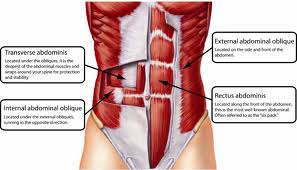
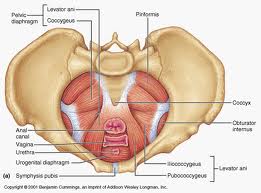
Everyone has probably heard the term “Core Strength”.  In the last ten years it has become a common term used to describe muscles that stabilise the spine, torso and abdomen.  These muscles include the inner core transverse abdominus, pelvic floor, diaphragm and multifidus and the outer core including the rest of the abdominals, erector spinae, and other large muscles of the pelvis and hip.

Diaphragm Role

The diaphragm’s role in control of postural has been the focus of research in recent years. The results suggest that the diaphragm has a role in trunk stabilisation and this role is co-coordinated with the other deep stabilizers particularly the transverse abdominis and pelvic floor muscles.  Therefore good diaphragmatic activation is necessary for good trunk control.

The Anatomy of the Diaphragm

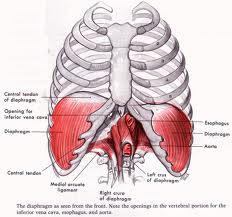
The diaphragm is the main muscle for respiration.  The diaphragm is a muscle similar to the other muscles in your body.  When you consider the anatomy of the diaphragm it is clear why researchers are interested in its trunk stabilization role.  There are two parts to the diaphragm muscle – The central (crural) portion attaches on the thoracolumbar fascia across your back as well as the front of the discs of lumbar vertebrae in your spine. The outer diaphragm (costal portion) attaches to the lower six ribs and interdigitates with the transversus abdominus muscle.

Do you breathe correctly?

Good breathing patterns involve recruitment of both portions of the diaphragm – this means that your lower ribs should move outwards.  If your ribs are not moving outwards it means you are under recruiting the outer (costal) portion of your diaphragm.  Thus you are only recruiting the central (crural) portion of the diaphragm – the part that attaches to your spine.  This puts more pressure on your spine.  An analogy I like to use is that you have put up your tent using only the center pole and you have not pegged out your side ropes. This puts a lot of pressure on your centre pole (the spine) and makes it more unstable.

There are generally two patterns of poor breathing that lead to spinal pain.  One is where you breath too much into the upper chest  – this puts more pressure on you neck as well as your low back. The other is where you breath too much into the lower abdomen putting pressure on your lower spine and pelvic floor.

Tips to Activate your Diaphragm and make it work correctly

Sit up tall with your hands resting on your lower ribs. Take a deep breath in and you should feel your lower ribs move outwards.  If this does not happen try to close your mouth and take a big sniff in through your nose, this should assist diaphragm recruitment.

If you are still having trouble with good activation of your diaphragm you may benefit from assessment with one of the physios at Gold Coast Physio and Sports Health.

To assist in maximising all of your deep stability muscles helping you breathe correctly, stabilise your back and trunk and relieve pain, you may like to join us for Pilate’s classes. To make an appointment call us on 07 5500 6470
Massaging for the Aussie Swim Team at World Short Course Championships

Written By GCPSH Principal Remedial Massage Therapist, Thea Dillon

Christmas came early for me this year! For two weeks in December (4th-18th), I had the privilege of working as a Massage Therapist for the Australian Swim Team at World Short Course Championships. The 5 day meet was held in Istanbul, Turkey, with the temporary indoor competiton and warmup pool for the 1600 competing swimmers erected inside a basketball stadium on the outskirts of the city.

Being winter in Turkey at this time of year, it was rather chilly, with the maximum temperature rarely exceeding 8degrees, minimum temp generally 2-3 degrees. In fact, it snowed only a few days after we arrived back home. With a population of around 20million people the traffic in Istanbul was crazy .. organised chaos is a fairly accurate description. This being the case, our team hotel was located close to the pool, not to mention right next to the airport, on the outskirts of the city. Being atleast 20km (and an hour’s drive) from the ancient city centre, we had limited opportunity to check out the famous historical and tourist areas.

We arrived in Istanbul 6 days before the meet started, giving the athletes plenty of time to recover from jetlag and get acclimatised to the pool and conditions. This meant that we did get the opportunity to travel as a team into the city for a 2 hour visit to the Blue Mosque and surrounding attractions, and a brief 1 hour visit to the Grand Bazaar (indoor markets with around 5000 stalls – features in the opening scenes of the latest James Bond movie) perfect timing for some Christmas shopping!!

I was working alongside Massage Therapist Amanda Foulkes from Sydney and Physios Russell Smallwood (Sunshine Coast) and Lauren Harms (Brisbane). With a relatively small team of 19 athletes selected given the tough qualification standards set by Swimming Australia, our workload was pretty steady with occasional really busy and really quiet periods.

I spent those first 6 days either massaging athletes at the team hotel, attending swim training sessions (once a day), or heading to the local shops for a Turkish coffee or Apple Tea. The authentic turkish delight, pastries (ie – bakclava) and chocolates in Turkey have to be seen and tasted to be believed!! With Islam being the main religion we heard the call to prayer over the loud speakers several times each day, the first of which a ready-made alarm clock just after 6am (an hour before sunrise).

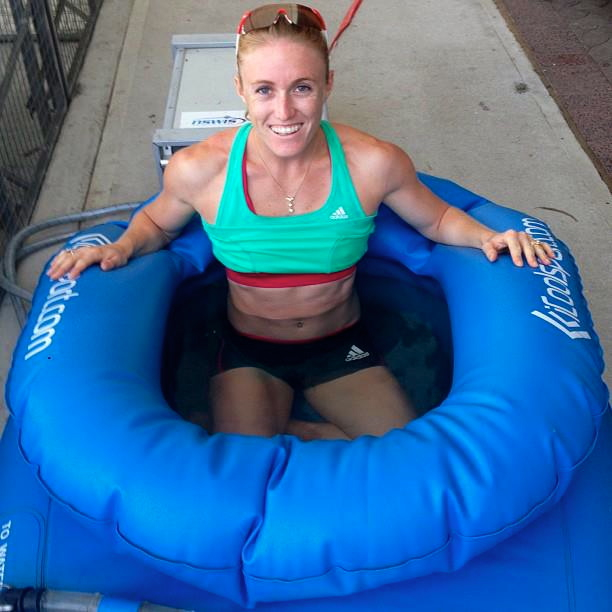
Once we were in competition, massage and physio treatment was generally undertaken at the pool. Each Team is allocated (more like finds and fights for) some space at the competition venue to set up treatment tables, use for stretching and dryland warmup, and in our case, an ice bath to use for recovery.  Each day during competition, our team of Massage Therapists and Physios head to the pool with the first athletes and generally leave with the last athletes, meaning that we were often leaving the hotel at 7am, returning at 2-2:30pm for lunch, then heading to a team meeting at 4:15pm before heading back to the pool, returning for dinner at around 10pm.

For those of you who aren’t sure what the difference between short course and long course racing is, at a short course meet the events are held in a 25metre pool, instead of the olympic size 50m.

Racing in a shorter pool means that the skill component is especially important – in addition to being super fast swimmers, the best short course swimmers in the world are great starters, exceptional turners and have fantastic underwater skills off the wall.

The Aussie Team on this trip was really great to work with. From the athletes to the coaches and other support staff, there was a really positive, enthusiastic attitude throughout the group, and a really strong sense of team spirit & Aussie pride.

As for results, the majority of athletes swam PBs or close to and we medalled in every relay that we contested (an indication of strong team spirit I think). Standout athletes of the meet were Bobby Hurley (Gold 50m Backstroke and twice broke the Australian record), Sarah Katsoulis (Bronze 50m Breaststroke; 4th 100m Breaststroke), Kenny To (Silver 100m medley) and Angie Bainbridge (Bronze 100m Freestyle).

Here’s hoping I will have the opportunity to work with the Aussie Swim Team again in 2013.. As for now, it’s back to work in clinic at GCPSH

Elbow pain when your playing sport? It could be “tennis elbow”

What is tennis elbow?

By Physio Simon Mead

Lateral epicondylitis or
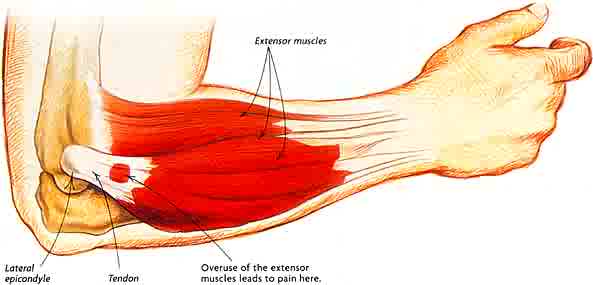
lateral epicondylalgia, commonly known as “tennis elbow” is an overuse injury that occurs on the lateral (outside) aspect of your elbow. It affects the forearm extensor tendon (the tendon that attaches the muscles on the back of your forearm to the bone) at its attachment to the lateral epicondyle (the bony prominence on the outer edge of your elbow).

The extensor tendon becomes painful due to microscopic changes within the tendon fibres as they become swollen and disorganised. If the pain continues for a long period of time then the extensor tendon will become degenerative and may also result in small tears with in the tendon itself.

What causes tennis elbow?

Tennis elbow is an overuse injury caused by excessive use of the forearm extensor muscles. This overuse occurs in any activity that requires grasping or repetitive movement of the forearm, such as tennis, rowing, kayaking, typing, hammering, painting, repetitive lifting or gripping activities etc.

Excessive overload of the extensor tendon during sport and work generally occurs as a result of poor technique (such as a poor back hand shot in tennis) or a change in training equipment (ie. a thicker gripped tennis racquet). It can also occur after a sudden increase in training/work load that the extensor tendon cannot cope with.

Symptoms

  • Pain on the lateral  (outside) aspect of the elbow, particularly with grasping and gripping activities or racquet sports (this includes golf). This pain can often radiate down into the forearm muscles.
  • Point tenderness over the lateral epicondyle (the bony prominence on the outer edge of the elbow).
  • Reduced grip strength and weakness with picking up objects.
  • Morning stiffness.

Treatment

Treatment of tennis elbow firstly involves settling the current symptoms, and then secondly identifying the causes of the extensor tendon overload to reduce the risk of the pain returning.

To reduce the symptoms you need to avoid aggravating factors, de-load the tendon via the use of a brace or strapping and also change your training load. Your physiotherapist will also aid with pain relief with soft tissue release of your extensor muscles, elbow joint mobilisations and strapping.

Once the pain has subsided the causes of the extensor tendon overload needs to be identified. This can be done with a video analysis of your technique, overview of your training load and a thorough assessment from your physiotherapist on your biomechanics, flexibility, strength, training technique and equipment being used.

If you are experiencing any elbow pain, or you feel that your are at risk of developing tennis elbow then please feel free to see one of our physiotherapists for a thorough assessment of your elbow, biomechanics and training technique, phone (07) 5500 6470 for an appointment.

Do you suffer from Delayed Onset Muscle Soreness (DOMS)- what can help?

What is Delayed Onset Muscle Soreness (DOMS)?

Almost everyone has experienced sore muscles 1-2 days after a new or heavier workout in the gym or training, an unaccustomed hill walk or run, or after that first game of the year, but do you know what causes that muscle pain?

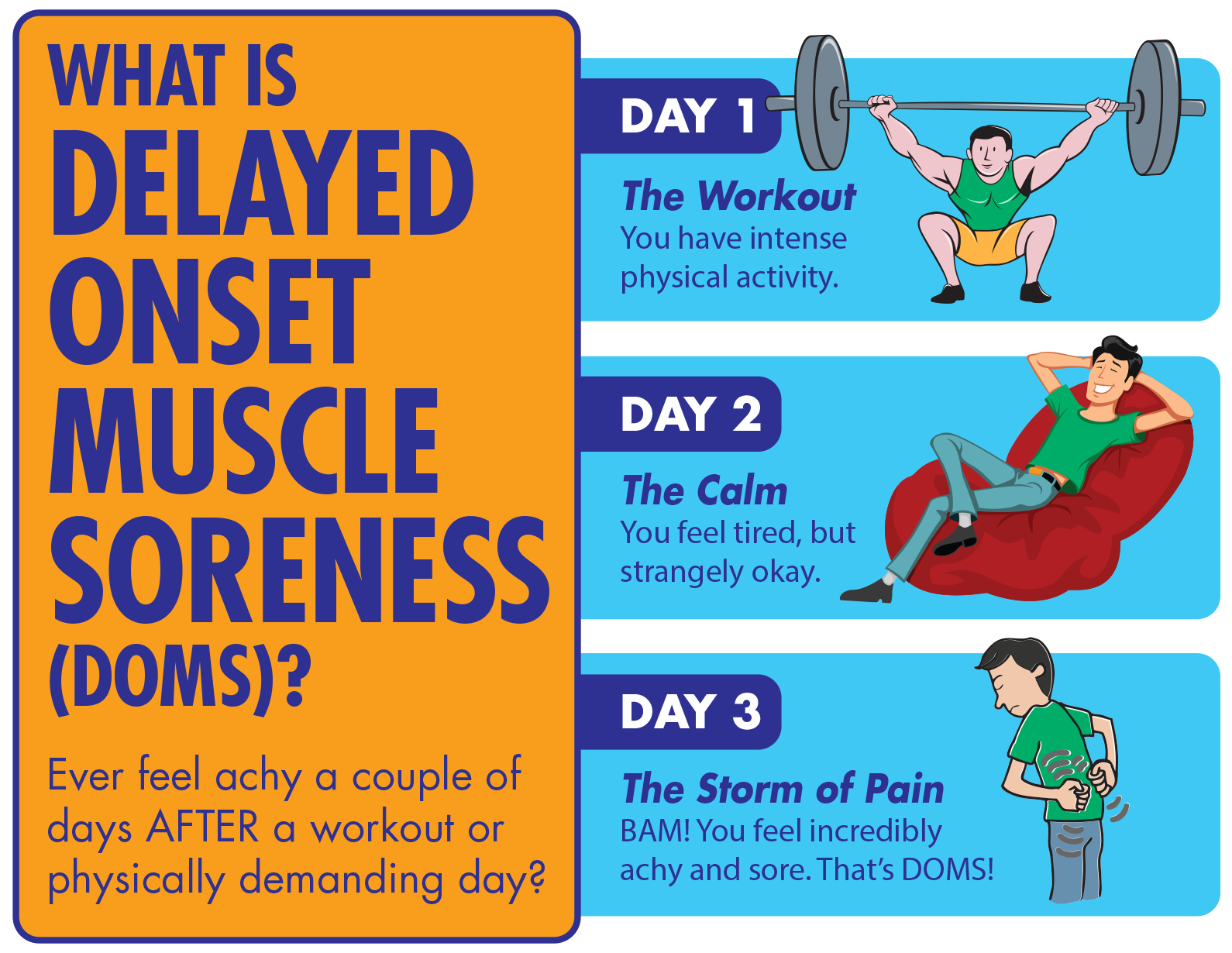
DOSM delayed onset muscle soreness physioashburtonThis muscle pain is called Delayed Onset Muscle Soreness (DOMS) and it usually comes on 24-48hours after unaccustomed physical activity. Evidence shows that DOM’s is usually more severe after eccentric exercise which is where muscle contraction happens while the muscle is lengthening out. This causes microdamage at the muscle fibre level and result in an exaggerated inflammatory reaction.
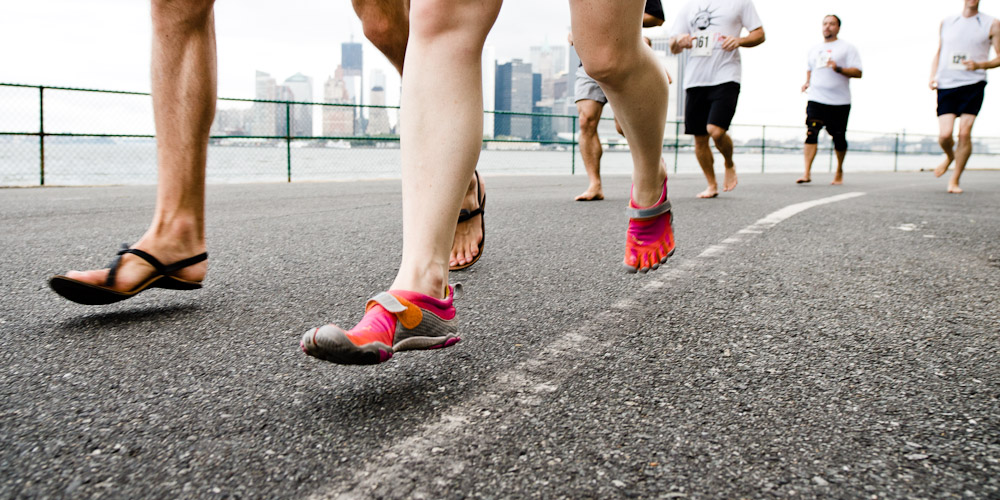
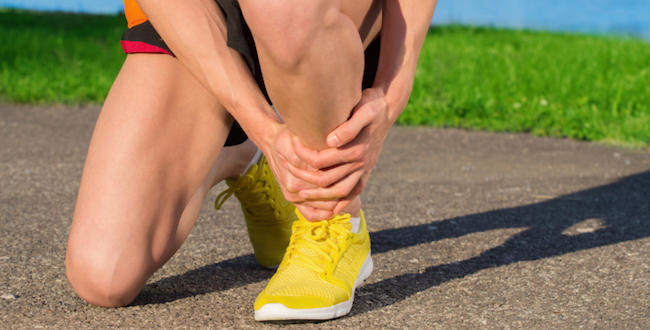
DOMS can occur in any muscle of the body that has recently been exposed to unfamiliar or intense physical activity.

Why it is DOMS worse 48 hours after the physical acvitiy bout? This because of the time-frame for the inflammatory process to peak and begin to repair the microdamage. Many hormones and chemicals are released by the body during this time to clean up the inflamed site and rebuild the microscopic tears that have occurred.

DOMS will often present at about 24hrs after the activity bout, peak at 48hrs and settle within 3days, but in some instances, it may take longer.

The good thing about DOMS is each time you experience it, your muscles will repair stronger to adapt to this stimulus, so take solace in the pain of DOMS that you are actually doing yourself some good. The caution with this is to not push your damaged muscles excessively in this  period of damage (gentle activity is fine to help maintain mobility and movement), but wait until your muscle pain has settled before you engage in any demanding physical activity to ensure you don’t create a true injury.

What to do to help Delayed Onset Muscle Soreness (DOMS- or Exercise Induced Muscle Soreness)

A  review and meta-analysis from Torres et al (2012) has evaluated the effectiveness of various physiotherapeutic interventions on exercise-induced muscle damage or delayed onset muscle soreness (DOMS).

The review looked at whether Massage, Icing, Stretching or Recovery Exercise can help reduce the soreness from DOMS and accelerate the recovery of reduced muscle strength that also comes with DOMS.

Take Home Messages

• Massage therapy following high-intensity & strength exercise may produce some mild improvements in muscle soreness and strength for exercise induced muscle damage.
• Cryotherapy (Icing) displayed mildbenefits at 24 hours only (not 1 or 4hrs post exercise).  More research is being done to look at the effects of mutliple bouts of Cryotherapy (ie. Ice Baths).
• There was no evidence for the use of stretching or low intensity (recovery) exercise for muscle soreness or strength in exercise-induced muscle damage.

Read more about Recovery Strategies that can help you train and perform here


What are Shin Splints?

By Physio Rob Taylor

Shin splints is a term that is used to describe pain on the inside of the shin, usually caused by running and sports that involve running (such as rugby or soccer).  We find that many of our clients ignore and pass off shin pain until it becomes bad enough that it interferes with training and competition.

Shin pain can actually be due to a number of reasons, each requiring a different treatment and management approach before you would be able to return to normal training and competition.

There are 3 main conditions that are commonly referred to as shin splints these are:

  • Medial (inside shin) tibial stress syndrome (MTSS)
  • Bone Stress fracture
  • Compartment syndrome

All three conditions are usually brought on by sudden increases in training and running load, without adequate rest periods between sessions. In addition, Running technique and how your body absorbs  and reacts to the ground reaction forces form running is likely the major cause related to the onset of shin splints.

The most common of these 3 conditions causing shin pain is called Medial tibial stress. MTSS is the most commonly referred to as shin splints. It is characterised by:

  • Pain on the inside of the shin bone.
  • Pain and symptoms being worse on starting training, with the pain lessening as you get warmed-up and progress through training and then a return of symptoms after exercise or the next morning.  As the condition worsens,  pain usually last longer into your training sessions and increases with exercise until it impacts on the amount of training and playing you can do
  • Pain usually settles with rest initially but as the condition worsens, it may be painful the next morning after training and/or just walking around
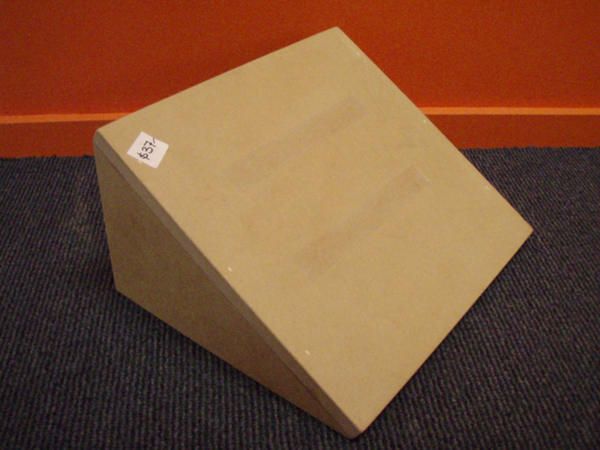
  • Treatment consists of modifying load (training), correction of biomechanical issues, stretching particular muscles (including good prolonged calf stretching on a calf wedge – see photo) , often massage and calf and foot strength exercises & most definately progressive  Calf  strengthening exercises.
  • Physio plays an important role in helping you with all these treatment factors, in particular normalising your soft tissue  tone (massage, dry needling or other techniques), giving you advice on training load, changing your running technique and providing exercises specific to you.

Stress Fractures are a less common but more serious problem that can occur in the shin. It is characterised by:

  • Pain that worsens with activity, to the point that even walking hurts
  • Pain particularly with hopping, jumping landing
  • Pain at night/rest
  • As the condition worsens swelling can occur over the site
  • Usually requires a scan such as MRI to confirm the diagnosis, especially in more severe cases as this will guide the period of rest/reduced load
  • A period of rest is usually required depending on the severity.  This may be rest from running, or in more severe cases, a period in a walking boot and crutches may be necessary.
  • A graded return to running program is essential to maintain load and prevent a reoccurrence of the condition.
  • Treatment will consist again of advice around the time off running, correction of biomechanical issues, strength exercises in calves and other lower limb muscles, and most importantly, a specific guided return to your activity and running program.

Compartment syndrome is an unusual condition where swelling occurs between the layers of muscle in shin. It is characterised by:

  • Swelling/tightness in the front, back, inside or outside of your shin that worsens with activity, in more severe cases a dead foot or pins and needles can occur
  • The symptoms quickly disappear after stopping exercise
  • Treatment of compartment syndrome involves soft/deep tissue therapy (dry needling can be particular effective) and correction of biomechanical issues (such as flat feet) and running technique to reduce the forces the muscles are required to generate when running .  In severe cases, surgery may be indicated to release the pressure in the fascia tissue surrounding the muscles.

To find out more about correct running programs, running technique, foot mechanics, calf & other muscle strength exercises or general questions about leg and foot strength and shin pain, come and see one of our physios at Gold Coast Phsyio & Sports Health, ph 07 5500 6470 or  Book Online.

or join us at our Learn to Run/Run Technique session to help correct your Run technique to eliminate your shin pain AND make you a better runner.

running physio and running technique
Loading...