13/345 Southport-Nerang Rd, Ashmore Q 4214
12/110 Kortum Drive, Burleigh Heads Q 4220

SPOIL YOUR VALENTINE THIS MONTH WITH $10 OFF MASSAGE & PHYSIO

Spoil your Valentine at Gold Coast Physio & Sports Health this month by booking yourself and that special person in your life a Physio or Massage appointment, and you and that special person both receive $10 OFF your following visit.

To be eligible for this special offer you need to make an appointment for your loved one whilst making your own appointment. (Appointments for your loved one can be made for different days to your own to suit your busy life style but need to be in the month of February)

We will also send your loved one a Valentines Day email with details of this special gift. So it’s time to pamper that special person in your life, after all Valentines day is just around the corner…

Call us now on 07 5560 6470 and make your Valentine Special this February…

*Offer valid until February 28th 2014. *Only One offer valid per couple. *Offer Not valid for Thea Dillon Massage.

Mothers Day Special Offer – To help get your Mum toned, taut, terrific & pain-free

FREE Pilates Mothers Day Special offer at Gold Coast Physio & Sports Health:

Do you want to help you Mum look toned, taut & terrifically flexible??  Or want to help your mum train for something and stay injury-free???

Offer 1:

Book a Pilates Screening Assessment with one of our Experienced Physio’s for your mum (or yourself) and she will receive her first Physio small-group Pilates Class for FREE (save over $40)*
A Pilates Screening Assessment with one of our Qualified Pilates Physio’s is a 30min Physio consultation where the Physio will assess your Mum’s flexibility, muscle control & posture and then design a program to address your Mum’s individual needs.
A small-group Pilates class has a maximum of 4 participants, so is perfect for your Mum to feel comfortable in getting tone, taut, terrifically flexible and pain-free and health fund rebates are available!

Offer 2:

Bring a friend*, ie your mum (who has not attended a pilates class before) to one of our small-group Pilates classes with Pilates Instructor Michaela Fischer or Katie Harders and you both receive a second class FREE (you both save over $20).

For times and info on our small-group Pilates classes, click here

*available only to clients who have not yet attended a small group pilates class; This Special Offer is available to be booked prior to Mothers Day on Sunday May 8th (class bookings can be made after this time). Not available for pre/post-natal pilates.

Phone (07) 5500 6470 to book or drop into clinic to book a session before Sunday May 8th

Need an alternate gift?  Don’t forget we do Gift Vouchers.


Plantar Foot Pain & Plantar Fascitis: Pain Under the Bottom of Your Foot

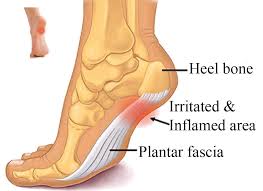
What is the plantar fascia?

The plantar fascia is a thick band of connective tissue on the sole of the foot which spans from the heel to the toes. It helps to create foot stability through the arch, and acts as a “spring” to store and generate power assisting our economy to walk and run.

What is plantar fasciitis?

Plantar fasciitis is the term used to describe pain, microtrauma and (if present) inflammation that presents in the plantar fascia as it inserts into the heel bone.  While it is also possible to tear the fascia, this condition is usually an overuse injury that develops from repetitive stress on the fascia from repetitive stretching and micro-stress of the “spring-like” connective tissue. It is particularly common in:

–          Runners (especially those with excessively flat feet, those with high arch, stiff feet or those with reduced range of movement in the toe joints and/or weak small muscles of the foot)
–          Overweight populations
–          Pregnant women
–          Those who wear inadequate footwear
–          Those with foot biomechanical foot issues

Symptoms

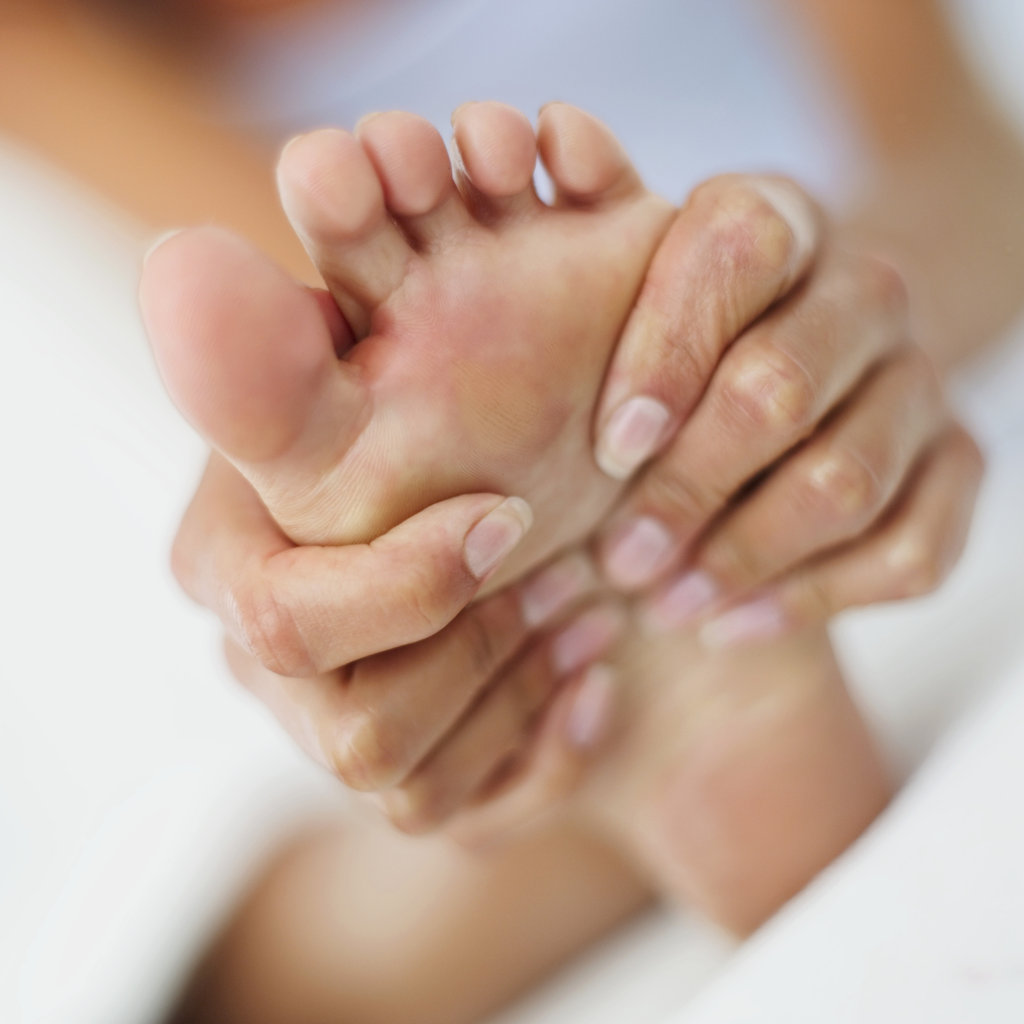
Pain tends to develop gradually under the bottom of the heel and can affect one or both feet- the pain often starts by feeling like a stone bruise.

Morning pain is a common, particularly with the first few steps taken after getting out of bed.
Pain may also be present with prolonged standing, walking, and power activities such as running and when hopping on the affected leg.

In a true Plantar Fasciitis pathology, pain will be felt when palpating the insertion of the plantar fascia under the heel bone. If a fascia tear is present, the pain may extend towards the toes somewhat, however, it is important to differentiate the region of palpation pain to help differentiate this condition from other less common foot problems.

Diagnosis

Diagnosis is made based on a number of signs, symptoms, and clinical tests including:

–          Observation of foot, knee, and hip mechanics with standing/walking/running
–          Muscle strength and tone (or muscle tension): especially assessing the small muscles within the foot that contribute to good foot posture
–          Specific palpation within the foot
–          Mobility testing of the ankle and foot joints

Collectively, these help to confirm the plantar fascia as the cause of the symptoms.

Imaging investigations may be needed, particularly to determine if a tear is present, or to differentiate if a plantar bone spur is present also under the base of the heel.  Scans may commonly include X-rays and MR. Images need to be read with caution however, as positive finding may not actually be symptomatic and the cause of the pain and limited function.

Treatment

If untreated and ignored, plantar fasciitis may result in long-term pain that can hinder normal activity. Due to the way in which this pathology can change your walking/running style, it can also lead to the development of other issues in the feet, knees, hips, and lower back.

Treatment often includes

–          Muscular and myofascial releases through the sole of the foot, calf, and hamstring.
–          Dry needling of the foot and calf to release excess muscle and soft tissue tension in these regions
–          Stretching of the calf complex (the fascia sheath around the calf becomes continuous with the plantar fascia so any additional calf tension may increase tension in the plantar fascia)
–          Advice on supportive footwear and training modifications
–          Correcting foot function: this may involve mobilising stiff feet and strengthening the small foot muscles in weak feet and overpronator.
–          Strength and Control training of the calf muscles and foot intrinsic muscles
–          Taping for foot arch support and unloading of the plantar fascia: if taping relieves symptoms, a visit to the Podiatrist may be indicated as you may benefit from custom orthotics
–          Night splinting to facilitate prolonged stretching of the muscles and fascia in the foot/calf.
–          A corticosteroid injection may be trialed if conservative management is not successful

What can GCPSH do for your Plantar Fasciitis?

Plantar foot pain is not uncommon and Plantar Fasciitis is only one cause of pain under the bottom of your foot. Many other intrinsic foot conditions are often diagnosed as this, but are actually a different or more complicated foot pathology  The physiotherapists at GCPSH are experts in biomechanical analysis and assessing function, including running technique.

After completing a thorough assessment to identify the potential causes of  yourplantar fasciitis, they will then assess your running technique to determine any technique-related causes. This will then allow them to specifically address your running technique with drills and exercises, as well as hands on treatment tailored to you.  We will be able to advise if a visit to the Podiatrist will be beneficial and assist in advice on whether your shoes need replacing, or you need a different shoe type.

All physiotherapists at GCPSH are trained and qualified in a form of acupuncture called dry needling which may also aid with your recovery.

GCPSH hold a running technique coaching class on the first Saturday of each month to help improve your running mechanics and technique, click here for more information regarding the class

The most common reason for Knee pain: Patello-Femoral (“P-F”) Knee pain

Hurting Knees when you run or ride? Perhaps you should read this – Patello-femoral (PF) Knee Pain

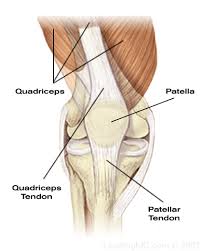
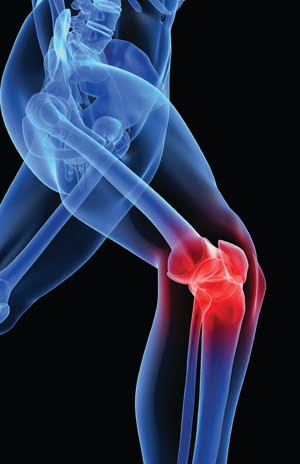
“Patello-femoral pain” is a general term used to describe pain at the front of the knee that arises from the articulation of the knee-cap (patella) and thigh bone (femur) and is thought to be the most common diagnosis of knee pain.  PF pain is most common in growing children and females but can affect everyone at anytime.

Athletes and the General Population with PF pain will complain of diffuse, vague pain at the front of the knee or they may describe the pain as “behind the knee-cap”.  The pain is aggravated by prolonged sitting or activities that load the quadriceps muscles such as efforts/hills on the bike, walking down/up stairs and squatting.

The underlying mechanism of the condition is somewhat unclear but it appears to be related to the way the patella moves (or tracks) during knee flexion (bend) and extension (straightening).  Abnormal patella tracking may result from a number of factors including poor anatomical alignment of the foot, knee or pelvis, poor squatting and bending technique, poor knee position when riding bikes as a result of poor bike set-up, or the development of muscle imbalances, particularly in the quadriceps muscle groups.  Any population with PF pain have been shown to have a dominance of activity in the outside quadriceps (vastus lateralis) compared to the inside quadriceps  (vastus medialis oblique- VMO).

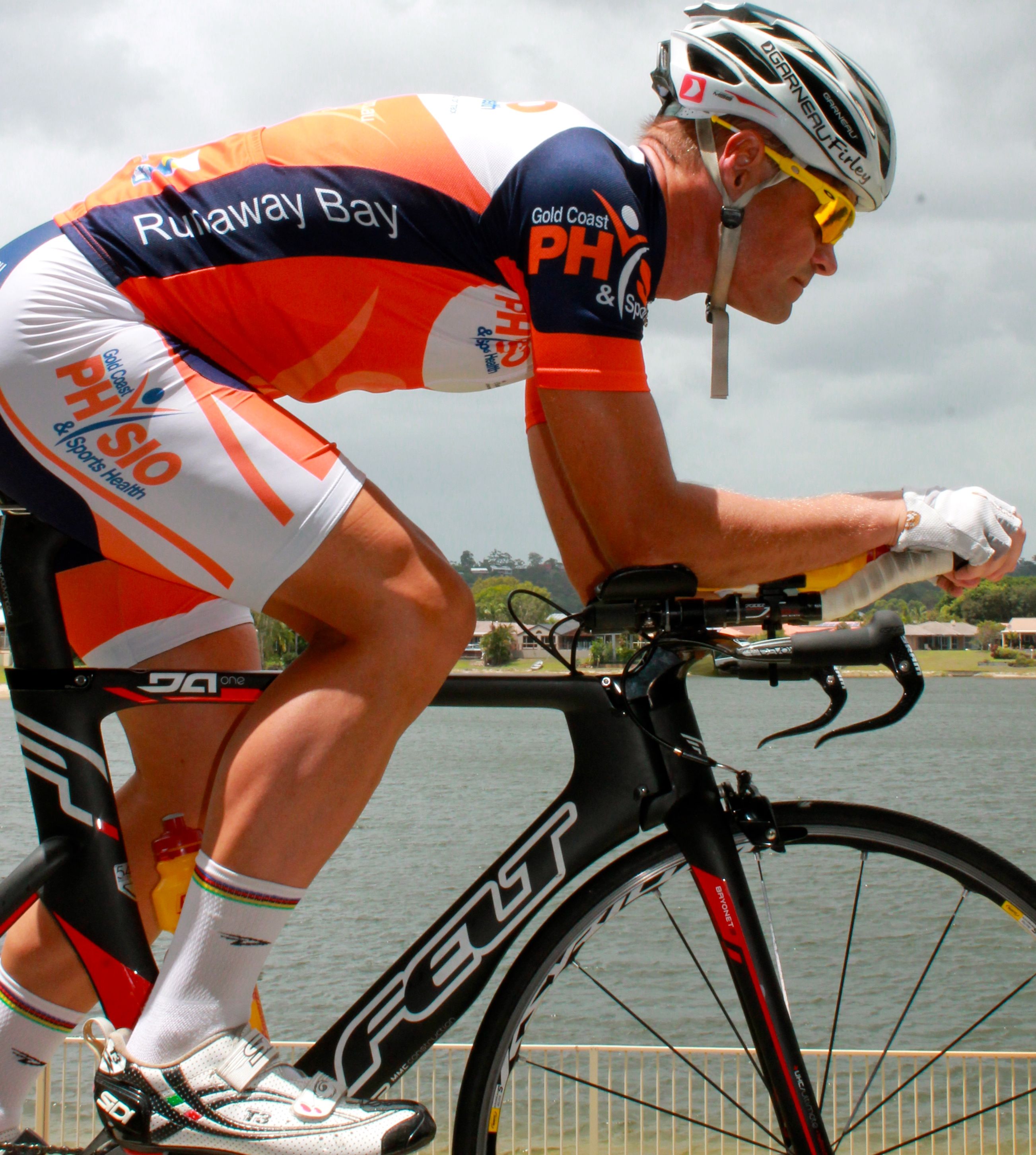
To prevent the onset of PF pain, it is essential that good quads timing of activation (ie. when the quads muscles contract) is maintained by ensuring that the inside quads (VMO) has good bulk and contraction. The outside quads (vastus lateralis) must stay soft in tone and not overactive.  Good gluteal hip muscle strength and intrinsic foot muscle strength to control foot posture is also very important.  For cyclists to prevent PF pain, they must ensure they have a correct bike position, with emphasis on shoe-cleat alignment, seat height and seat fore-aft positioning.  In particular, a seat that is too low will increase quadriceps loading and predispose to knee pain.  It has also been found that using cleat-pedal systems with increased ‘float’ reduces knee load, without compromising effective force transmission and is therefore recommended for cyclists with knee pain (Gregor and Wheeler 1994).  Other factors to monitor include pedalling technique (pushing harder gears will tend to aggravate knee pain), asymmetry of limbs or mechanics, and progression of training loads.

Prognosis is good with PF pain nearly always 100% resolving with Physio conservative management that involves correction of muscle imbalances, excess muscle/joint tightness and retraining of squat/bending techqniue and reviewing bike position (for cyclists).  Taping of the patella to facilitate correct tracking and a  progression of vastus medialis quadriceps strength should occur and may be achieved using a directed program of exercises.

If you think you may be experiencing Patello-femoral knee pain and it is limiting what you do, ring us for a consultation with one of our experienced Physio’s and they will get you back on track, no matter what your goals are….. appointments are assential ph (07) 5500 6470.

Burleigh Sports Physio Runaway Bay Sports Physio
Burleigh Physio Runaway Bay Physio

Who Should Stretch & Why: The Facts About Stretching…

Are you a “Stiffie”, a “Floppie” or maybe a “Flippie”:  WHO SHOULD STRETCH, WHY & THE FACTS ABOUT STRETCHING

The importance of a regular stretch program in maintaining a well-balanced, flexible body is well recognised by health professionals and exercise scientists worldwide, however, not everyone needs to stretch every muscle or even every day. So, how do you know if you need to stretch?

The concept of “Stiffies” versus “Floppies”

This concept was developed in 1995 by physiotherapist Anna-Louise Bouvier based on each individual’s inherent level of flexibility, stability and strength (for more information, go to Physiocise website).

The essence of this concept is that flexibility varies between individuals and even between different joints in the same person. Factors such as age, weight, lifestyle, abnormal biomechanics (how our joints and muscles work) and prior injuries can all play a role in these differences.

Another big factor determining flexibility is genetics.  Imagine each individual in the world can be placed on a scale based on their intrinsic, genetic tissue flexibility and mobility:

– At one end of the scale we have “stiffies”- these are people who are made-up of genetically stiffer tissues (there tissues likely have more collagen content). They have stiff joints and muscle tissue and have generally poorer flexibility. These athletes always have to work harder at maintaining flexibility and soft, healthy muscle tone.

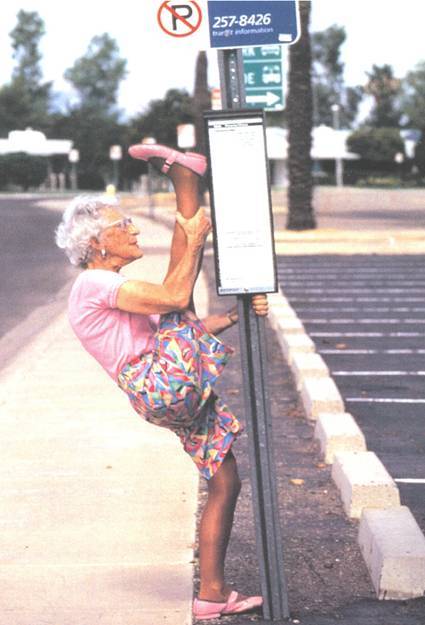
– At the other end of the scale are “floppies’ – these people genetically have been given loose, flexible tissues (they likely have a higher content of elastin in their tissues). “Floppies” don’t have to stretch much (if at all) to maintain really good flexibility and have amazing joint flexibility (you know those ‘double-jointed’ people doing the party tricks like putting their feet behind their head). Floppies usually have soft, supple muscle tone.

– And then there are also “flippies”- these people are usually floppies but with stiff bits or stiff bits that come and go.

Put simply, Stiffies nearly always need to stretch regularly, while Floppies may not need to stretch at all, and Flippies should stretch only specific area’s that need to be stretched

Physio’s now recognise this individualised need for stretching and the potential risk of stretching for some individuals (there may be adverse effects from Floppies stretching too much or flippies stretching the wrong bits, or from stiffies stretching the wrong way), it is advised that you discuss your needs with your Physio prior to starting a stretch program (this includes yoga).

Any stretch program should also be individualised to your needs based on sport, level of participation and previous injury history.

Don’t mistake muscle “tone” with poor flexibility

Consider muscles have 2 main components:

1= flexibility. This relates to the length of the muscle or tissue

2=tone. This relates to the tension within the muscle or tissue.  A muscle can have good flexibility (ie. Have enough length in it to achieve a task effectively or safely) but be too high in tone (too tense) to work effectively. Additionally, muscles that have poor tone (too soft and floopy) generally aren’t used enough and may therefore be weak.

As a rule of thumb, consider stretching to address flexibility, while massage, self-massage or self-trigger points address excessive tone. This is where regular massage for athletes, and particularly stiffie athletes is important. How regular you need to have a massage is also individual and depends on your genetic stiffies, flippie or floppie status, your frequency of muscle use and individual patterns of muscle use. Cycling as an example has extreme numbers of repetitions of movement, meaning high frequency of repeated muscle contractions in the same manner.  The benefit to cycling over a weight-bearing sport like running is no ground impact forces which can often be 3-4times body weight, so muscles in cycling are not exposed to the high levels of force, just frequency of contractions.

So, What actually happens when you stretch?

As you stretch, the soft tissue elements that surround a joint are put into a lengthened position and undergo a phenomenon known as “creep” whereby the stiffness within the tissue should begin to reduce as this lengthened state is maintained.  Muscles have in-built mechanisms that act in response to stretching movements- if a tissue is stretched too quickly the muscle reacts by contracting.  The more sudden the stretch, the stronger the muscle contraction will be.  The muscle therefore has to be stretched slowly and held in position for a prolonged period to reduce the activation of these protective mechanisms, thereby allowing the tissues to lengthen and relax.

Types of stretching

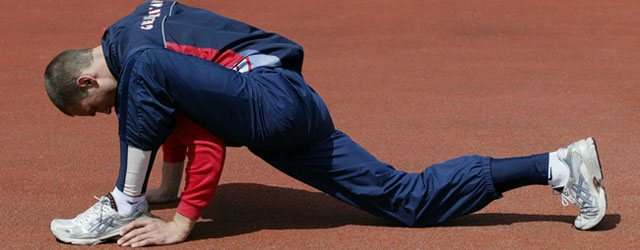
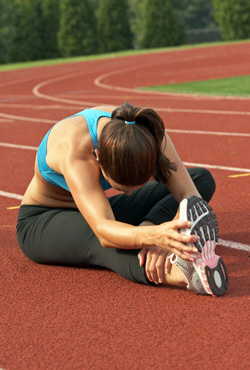
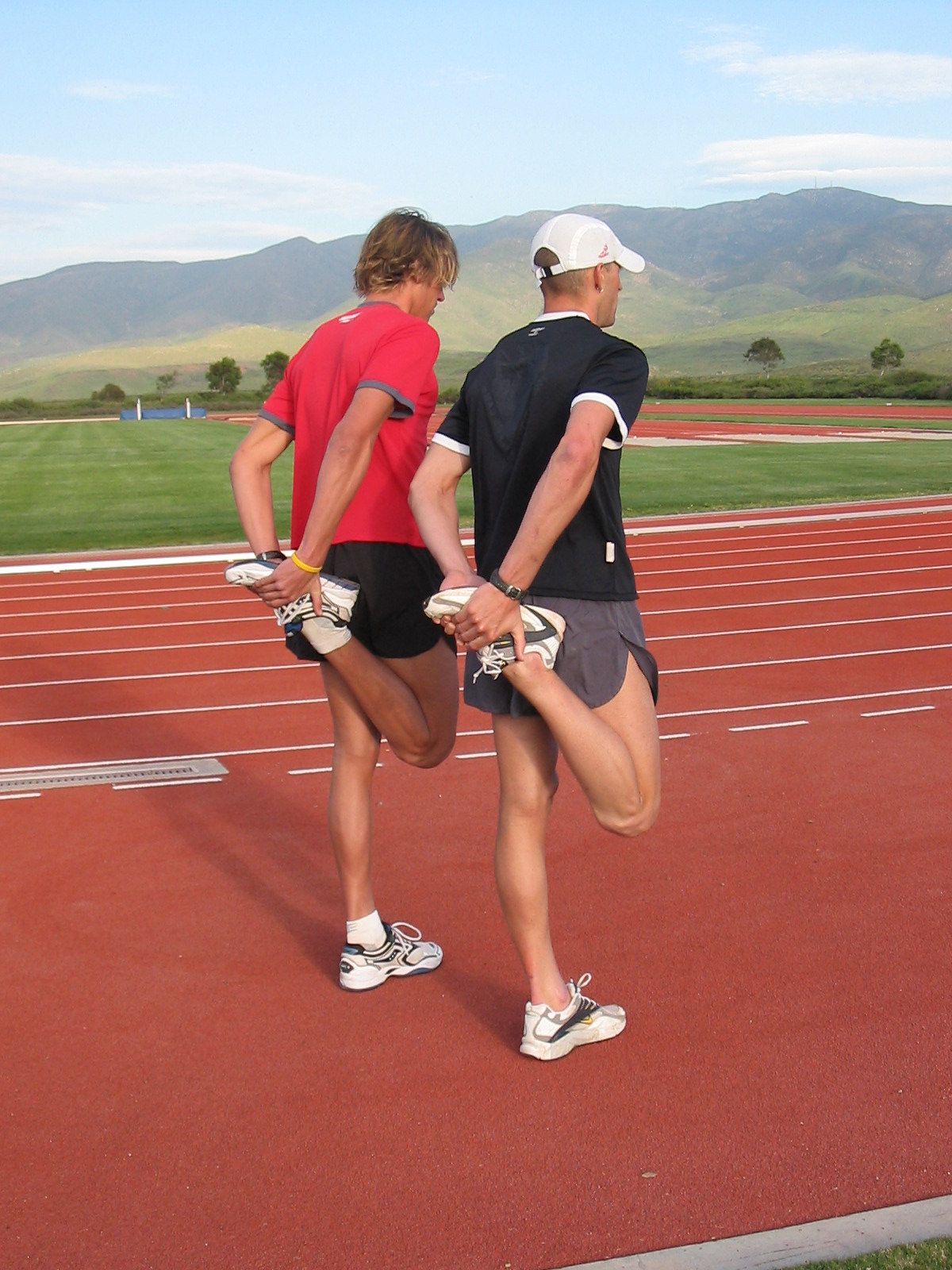
  1. Static stretching is the most common technique. This is where you slowly ease into a position that places the muscle in a maximally lengthened position, with one end of the muscle fixed. This position is held for a period of time appropriate to the individual.
  2. Dynamic stretching involves movements of gradually increasing range of motion to meet or enhance the range of movement typically used during specific activities or sports. Examples include controlled leg and arm swings that take you (gently!) to the limits of your range of motion.
  3. Ballistic stretching involves trying to force a part of the body beyond its normal range of motion by the use of bouncing into or out of the stretched position. This ‘bouncing’ is considered dangerous and is not recommended. It does not allow your muscles to adjust to, and relax in, the stretched position. Consequently, the muscles’ protective mechanism (the stretch reflex) is activated and muscle tissue tensions.
  4. PNF (proprioceptive neuromuscular facilitation) is a technique that uses various combinations of alternating contractions and relaxations of opposing muscle groups.  A partner experienced in this technique is needed to assist the individual being stretched in resisting the motions caused by muscle contraction.

The benefits of stretching

Stretching is a combination of techniques used to relax and lengthen muscles in order to increase flexibility.  A stretch program that has been designed to suit your individual body and needs has a number of benefits:

– It can help to reduce muscle stiffness and muscle tension: this can improve flexibility and reduce pain that results from excess muscle tension

– improved flexibility in the right area’s results in better posture and reduced pain from poor posture

– many of our body’s tissues naturally get stiffer as we  age, so regular stretching will help reduce some of the age-related tissue symptoms

– stretching may help to reduce delayed onset of muscle soreness that results from unaccustomed activity

– in relation to sports performance, most sports require a certain amount of flexibility and joint range of motion in specific area’s to allow for ideal technique. Stretching is one component that will assist in achieving this required flexibility for improved performance.

– stretching for recovery can be a relaxing experience and can help in mental recovery from sports and activity

– stretching may help reduce your injury risk. When an individualised stretch routine is combined with a strength program, some joint and muscle imbalances can be improved.  Our muscles are generally organised in pairs or groups around our joints to maintain stability or to create movement. The problem arises in that certain muscles become overworked and tight whereas others become weakened, thereby creating unbalanced loads at the joints.  There is no evidence to support the theory that stretching immediately before exercise prevents injury. A good warm-up, appropriately designed training programs, and correct technique is far more important in preventing injury

Should I stretch in my warm-up?

A stretch program is not the same as a warm-up. A warm-up is a combination of sports specific exercises of increasing intensity aiming to increase the temperature of muscles and tissues thereby increasing the tissue’s ability to withstand the tress and strain of activity.  A warm-up also aims to improve coordination and concentration, as well as prepare the heart and lungs for the demands of the activity. Static stretching may be one component used early in a warm-up, while dynamic stretches should be used through-out your warm-up to prepare the tissues for the requirements of activity.

Why don’t I want my muscles to be just statically stretched just before exercise?

Muscles that are in a lengthened and relaxed state are not in a condition to produce high levels of force.  If you are competing in sports that require maximal strength output, such as sprinting off the start line, your muscles need to be stiff in order to produce the necessary forces. Stiffness in muscles is an important safety factor in certain sports too, such as neck muscles in football to cope with the forces of tackles and scrums. Carrying out static stretches directly before such events is therefore counterproductive, however, it is ok to perform static stretches at the start of your warm-up routine to improve mobility around a joint and then work through the rest of your warm-up to assist force generation.

Should I stretch if I am injured?

There is no straightforward answer to this question. In a lot of cases it is still possible to maintain your overall flexibility and perform a stretch program depending on the nature of the injury. In some cases of injury, specific stretching and soft tissue therapy is essential in assisting recovery from injury. A consultation with your physio is strongly recommended to assess your individual needs.

How long do I hold my stretches for?

Research trials have not come to a consensus about this. In general, I work on the principle that if you are aiming on improving flexibility then the tissues need a regular stimulus over a long period of time.

This may mean that Stiffies need to stretch everyday and it may take 4-6 weeks of stretching to achieve more permanent increases in static flexibility by 5-25%. Stretching programs must be maintained if these gains are to persist.

Floppies may only need to stretch some bits if they are feeling particularly “tight” so they may just need a very specific massage by a massage therapist that understands individual differences and doesn’t just “release” (ie aim to improve mobility in fascia tissue surrounding muscles) all muscles and soft tissues.

Any of the Physio’s at GCPSH can help you with a screening appointment to identify your body type, identify area’s of flexibility deficiencies or where you may need strengthening, and provide you with an individualized, appropriate stretch program based on your goals

Loading...