Is Lactic Acid your Friend or Foe ?
By Massage & Sports Massage Therapist Anthony Evans
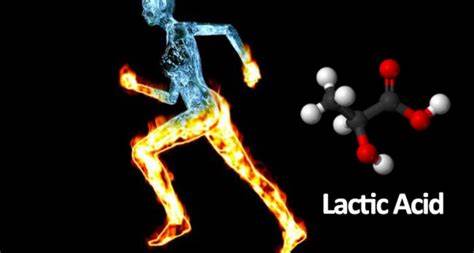 If you’ve ever exercised at high intensity, you’ll be familiar with that sensation of muscles full of the muscle by-product “lactic acid”. It feels uncomfortable, and maybe like you can’t keep moving, but the cause – lactic acid – is actually your ally, helping you move faster and lift heavier in the future!
When it comes to athletic performance, lactic acid has historically been viewed as a terrible thing – the reason behind DOMS (Delayed Onset Muscle Soreness) and fatigue. We see it as a waste product that holds us back and prevents us from achieving our best. But what if I told you this is completely wrong.
When we do strenuous, high intensity exercise, we breathe faster in order to transfer more oxygen to the working muscles. In most cases our bodies naturally prefer to generate energy using the aerobic system ( “with oxygen”). However, when our bodies are under higher stress – trying to lift heavy weights or perform fast sprints – we switch to the anaerobic system (“without oxygen”) to produce this energy. When this happens, the body produces a substance called lactate which allows the breakdown of glucose – and the production of energy – to continue.
High blood lactate levels actually slow down the muscle’s capacity for more work. If it seems counter-intuitive that the body would produce something that actually reduces its ability to perform, it’s not. It turns out that lactic acid is a natural defence mechanism that prevents us from over-doing it … and doing ourselves permanent damage.
Why is lactic acid traditionally seen as bad?
 The accumulation of lactic acid in the muscles has long been incorrectly associated with fatigue during exercise, as well being linked with delayed-onset muscle soreness (DOMS). Even today you’ll hear sports commentators saying, “athlete X must be fatiguing/tiring because of lactic acid build up”.
We know now that this is not the case, as lactic acid has no direct role in causing these exercise-related symptoms.
More recent schools of thought consider that lactate is no longer a so-called “harmful waste product”, but rather is a supplemental fuel.
Lactate produced during exercise can be used as a fuel source both during the exercise itself, depending on intensity, and during rest.
The human body is extremely efficient and can recycle produced lactate for oxidation in the heart and brain.
What are the benefits of lactic acid?
The production of lactate serves to reduce acidity in the blood and muscle in an attempt to maintain an optimal pH level in the muscle, and to allow the muscle to keep contracting at high rates. However, this “buffering” can’t last forever, so when pH in the muscle starts to drop and hydrogen ions accumulate, this is when the sensation of “burning” is felt as the disruption to the muscle’s ability to contract starts to occur and the discomfort from lactate is felt by you.
Lactate also helps to preserve other fuel stores and is a direct source of energy for the muscles, heart and brain. The body is efficient at re-using lactate and can even “shuttle” lactate to different parts of the muscle and between tissues.
From a training perspective, lactate has been viewed as an important “signalling molecule” for promoting adaptation. What I mean by that is, the production of lactate during exercise triggers a series of metabolic changes that will enhance the ability of the muscle to use and remove it.
How does Lactate contribute to exercise performance?
 It depends on the sport or exercise you choose. For endurance-based sports you want to minimize the production of lactate and be able to clear it quickly so you can continue for longer periods. Endurance cyclists and runners are the best at doing this because they typically have a high proportion of well-conditioned slow twitch “oxidative- use oxygen to contract” muscle fibers. These types of fibres help to produce energy for movement without the accumulation of lactate.
Short duration sprint/power athletes, however, often have more fast twitch “glycolytic” fibers, and these fibers will naturally produce high amounts of lactate so they can perform high-intensity movements such as sprinting. Our best sprint/power athletes have high amounts of these fast twitch fibres and this is what makes them so good!
So, is Lactic Acid Friend or Foe? Ultimately this depends on what sport you do, and how conditioned you are at your sport (and a little genetics too), and how tolerate you are to the discomfort it can creat. Lactic acid is certainly nothing to be afraid of for good sports performance!!
If you are interested in this topic and want to know more, come and visit our Exercise Physiologists for an appointment and they can help both workout a useful exercise test to help give you a profile of your Lactic acid accumulation, and give you accurate education around the role of Lactate and how to best structure your training for best performance.
Happy Training!

 You may have PPPD (Persistent Postural Perceptual Dizziness).
 But there is something you can do: See a Physio, for an exercise programme (vestibular rehabilitation), and some treatment for your neck, as well as an explanation about the condition.
 Book with Helen in the clinic by calling 07 5500 6470 or Book Online 24/7