13/345 Southport-Nerang Rd, Ashmore Q 4214
12/110 Kortum Drive, Burleigh Heads Q 4220

Learning from Exercise, Sports & Adversity

Learning from Exercise, Sport and Adversity

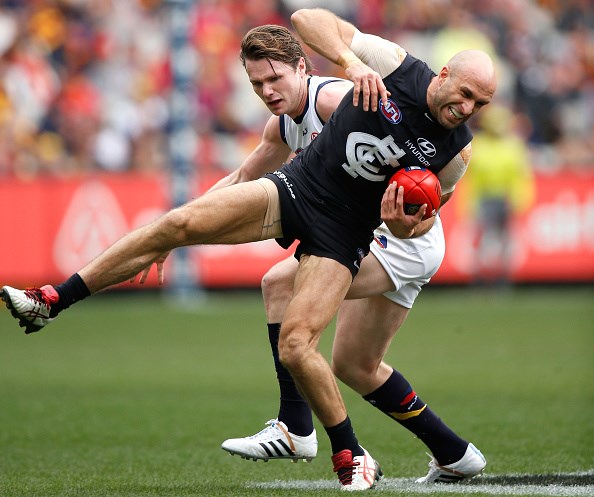
By Sports & Exercise Physio, previous Carlton & Gold Coast Suns AFL Physio, Mark Homewood

“Injuries are our best teachers.” Scott Jurek, Ultramarathon runner

Sometimes you’re the hammer and sometimes you’re the nail. Sports and exercise provide us the opportunity to challenge ourselves to achieve feats that we never thought possible. Whether it be a personal best over 5k, completing your first marathon or helping your teammates to victory, we learn from these triumphs and feel a sense of fulfillment in knocking over a personal goal.

Sometimes, despite the best-laid plans, things can go wrong. Injury can rob of us the chance to compete or severely impact on our training and decrease performance. But an injury doesn’t need to result in wasted time on the road to recovery.

Here are my top 5 tips to deal with injury:

1. (Relative) Rest
Your body more often than not needs a period of rest to ensure adequate healing. The length of this period of rest is naturally dependent on your injury and you will be provided with recommendations on how to rest your injury and for how long by your physiotherapist or sports physician. Injury will place your body under additional stress so it may be a good time to take a few days away from the gym, relax at home, gather your thoughts, spend some time with family, get outdoors and gather your and get your mind and body on the same page.

2. Get some support
Dealing with your injury doesn’t have to be a struggle you need to face on your own. Find a physiotherapist or exercise physiologist (at Gold Coast Physio and Sports Health naturally!) to help guide you through your rehabilitation journey. We can collaborate with you to help construct a pathway to recovery and improved levels of fitness and resilience. If you need more support, consider a Sports Psychologist.

3. Fuel your body
Ensure that you are fuelling your body with quality food to ensure optimal healing and recovery. Eat your veggies, plenty of lean protein and reduce your intake of processed foods that may impact on your healing. A sports dietician (yep…we have one at Gold Coast Physio and Sports Health too) will help you to plan your meals and deliver quality nutrients to your body, getting you back on the training track as soon as possible.

4. Improve yourself
Focus on what you can do still do – not on what you can’t. If you have a lower body injury, look to cross-training activities involving the upper body, such as boxing or swimming to maintain your conditioning. Riding a bike, particularly a spin bike or trainer, or the elliptical/cross-trainer (or an Alter-G Treadmill if able) is an excellent way to maintain both your aerobic and anaerobic fitness. Use the downtime in your regular training activities to work on any deficits, such as trunk strength or shoulder health or aim to improve your mobility or flexibility. Consult with your physiotherapist or exercise physiologist for exercise prescription to tackle any weak links whilst you have the extra time to focus on them.

5. An opportunity to learn
Use your recovery time to reflect on any potential training errors that might have influenced your injury. Could it have been prevented with a better training program, or the addition of specific strength and conditioning exercises? What can you add or subtract from your training, lifestyle or the way that you compete in order to minimise your risk of subsequent injuries? This is an area where your physiotherapist or exercise physiologist can provide invaluable advice and recommendations to ensure that you recover from your injury and become more robust and resilient.

Treat your injury as an opportunity to learn and improve, hardening both your resolve and body through triumph over adversity. By seeing your injury as a potential blessing in disguise you can get back to training and competing and come back better than ever.

“An injury is not just a process of recovery, it’s a process of discovery.”

For an appointment, phone us on 07 55006470 or Book Online www.mygcphysio.com.au
gold coast dietitian

Become The Ultimate Runner Seminar Series

Become The Ultimate Runner Seminar Series

Seminar 3 – Strength Training: What All Runners Should Know To Make You A Better Runner

By APA Titled Sports & Exercise, Australian Olympic Team Physio (2012, 2016, appointed 2020) Britt Caling and Personal Trainer and Run/Tri Coach Adsy Gordon

[embeddoc url=”https://www.gcphysio.robicoweb.com.au/wp-content/uploads/2021/05/Be-The-Ultimate-Runenr-Seminar-3-2021-tips-and-tricks-for-being-a-stronger-runner.pptx” viewer=”microsoft”]

Seminar 2 – Survival Nutrition: Fuel Your Way Through Your Next Endurance event

By Accredited Sports Dietitian from Eatsmart Nutrition Steffani Ford

[embeddoc url=”https://www.gcphysio.robicoweb.com.au/wp-content/uploads/2021/05/Survival-nutrition-for-Become-the-Ultimate-Runner.pptx” viewer=”microsoft”]

Seminar 1- Minimise Your Risk of Injury because not running sucks!

By Running Physio Kyle Weise
[embeddoc url=”https://www.gcphysio.robicoweb.com.au/wp-content/uploads/2021/04/Become-The-Ultimate-Runner-seminar-1-2021.pptx” viewer=”microsoft”]


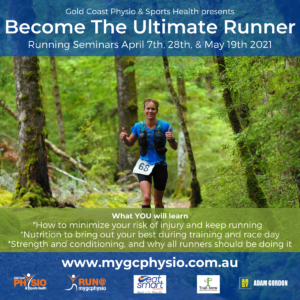
Become The Ultimate Runner

Running Seminars April 7th, 28th, and Mat 19th
Gold Coast Physio and Sports Health presents: Become the Ultimate Runner 2021
We are pleased to announce Gold Coast Physio and Sports Health will be providing a series of information seminars encompassing all things running.
Runners and endurance athletes of all ability levels will benefit from the extensive experience our team of presenters will share with you.
You will learn about:
• How to minimize your risk of injury and keep running
• Load management principles
• Nutrition to bring out your best during training and race day
• Strength and conditioning, and why all runners should be doing it
Seminars include:
• April 7th – Minimise your risk of running injuries – because not running sucks!!! (Presented by Kyle Weise – Physio and Ultra-runner)
• April 28th – Survival Nutrition: fuel your way through your next endurance event (Presented by Steff Ford – Sports Dietitian (EatSmart) & Britt Caling – Sports & Exercise & Olympic Physio and Ultra-runner)
• May 19th – Strength and Conditioning for runners: what all runners should do!!! (Adam ‘Adsy’ Gordon – Coach & PT fitness and Britt Caling)
Location: Gold Coast Physio and Sports Health – Burleigh Clinic  – Time: 6:30-7:30pm
$10 per seminar or $25 if you register for all 3 seminars

The most common training errors in running

The most common training errors in running

By Gold Coast Running Physio Kyle Weise

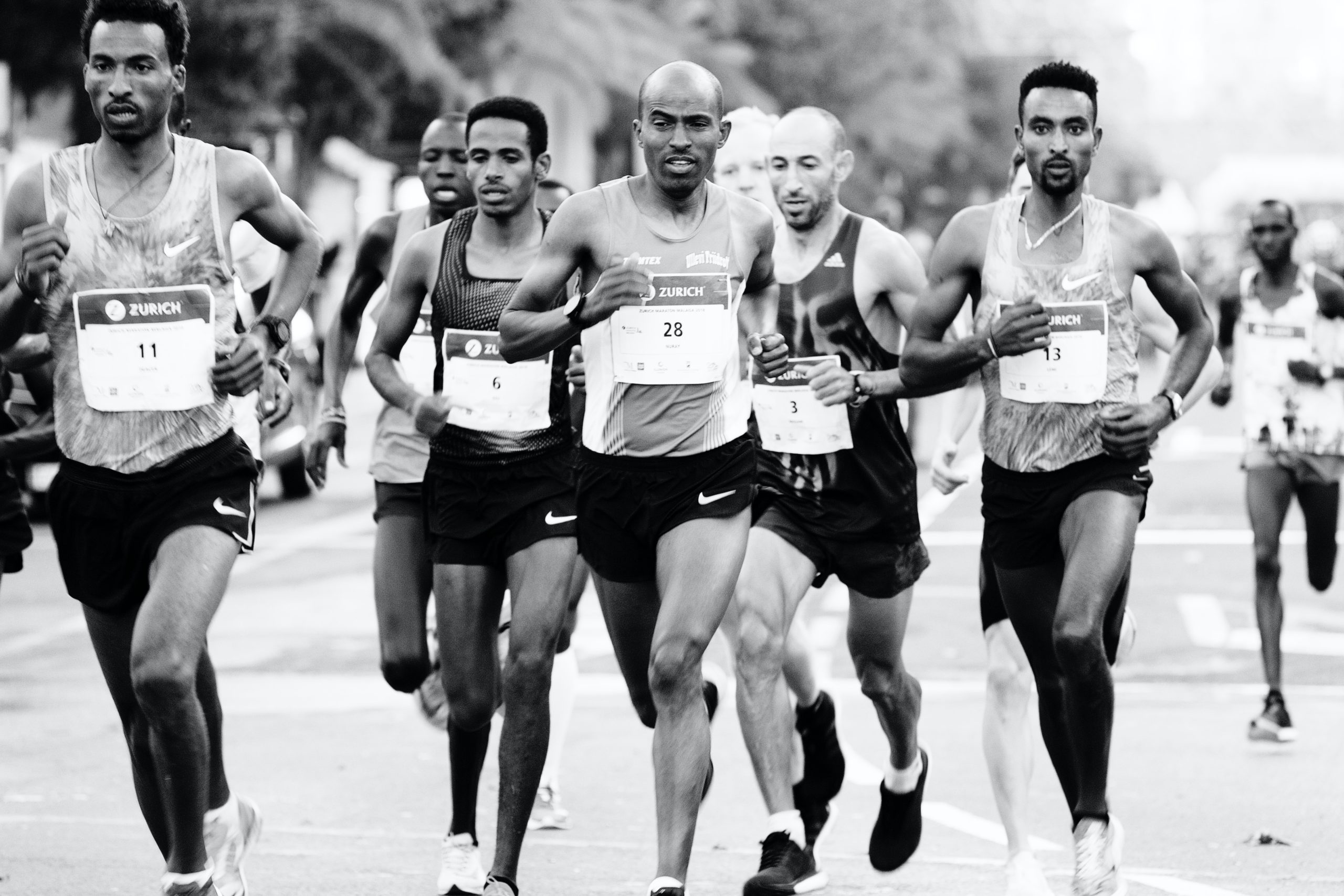
Dealing with injured runners on a daily basis allows me to develop a very clear picture of the common training errors that lead to running related injuries. There are always some very clear themes when I sit down and chat with a runner about their running prior to the current injury appearing.

When I ask a runner what they think caused their injury to occur, I generally get a few common answers:

  • “I have no idea” and
  • “I haven’t been stretching enough”.

But It’s only when we dive deeper into their training that we generally find the main causes and I’m going to go through these causes below in the hope that a few people reading this are able to be more aware of when they are making a mistake.

So What Are the Most Common Training Errors in Running?

1. Too quick of an increase in volume – Trying to make up for lost time (Returning too quickly post injury/holiday)
This is by far the most common factor we as Physio’s hear when seeing a runner for a new injury. The two most common reasons this seems to happen is: 1. Someone trying to “make up for lost time” after having a break due to either a previous injury or a holiday, or 2. Entering a race a little sooner than they should and trying to cram in as much training as they can. It is very easy to fall into the trap of running too much too quickly, but better to slowly progress your training then smashing it for a few weeks then ending up side-lined with another injury

2. Running easy runs too hard or with too much intensity
This is something I see every single day and I believe there are a couple of reasons for it: People that come into running from a gym/strength or team sport background are used to being able to push themselves to the limit on a daily basis. Now when you are at the gym and working different parts of your body each day you will get away with this as each area gets adequate recovery, however, running will in most part load the exact same structures every run and therefore pushing your body too hard every day is a recipe for disaster; Also, Beginners can get away with this as they don’t know any better, but the longer term runners who do this consistently tend to be the ones who like to impress their friends and show them just how fast they can “run easy”. Doing this does not help your long term fitness and can easily lead to excessive/unwarranted fatigue and subsequent injury.

3. Addition of hills to quicky
This one is for the trail runners. It’s something that not a lot of runners pay attention to as most runners track distance or time, however, I frequently see runners present with injuries and say how their loading has been consistent. However, when they look into their elevation change statistics, it tells a different story. Downhill and uphill running loads your body differently to running on the flat and therefore sudden changes in hill running can be a risk for anyone who has not run hills regularly. So if you are someone who is thinking of introducing hills into their running, start slow, perhaps only once per week initially and let your body adapt to the new terrain.

4. Copying the training of elite runners
We all love to follow our favourite elite athletes, however, sometimes we need reminding that these people are professionals and do this for a living. Yes, there are able to perform tremendous amounts of training but they are also able to perform tremendous amounts of recovery. Remember, you need to treat yourself as an individual and not copy someone who is at the top of their sport.

5. Not scheduling in recovery
This flows from the last point. Recovery is key to making gains from the training stimulus. If you aren’t recovering from the training you are performing then you aren’t benefitting from it. When you’re recovering from a run is when your body is adapting to the new stimulus that you have placed on it and this is where the magic happens. The last thing you want to do is head out for another run just after you have done a big long or hard run and haven’t fully recovered. Runners are general very dedicated individuals who are will to push their bodies to the limits. But it’s the ones who can hold themselves back at the right time that tend to be the long term winners.

6. Finally, a bonus mistake (and my personal favourite) – trying to impress your friends on Strava. I see this daily and trust me, it doesn’t end well!

The above informaiton only relates to training load errors & I have not discussed other external factors that may contribute to Injury, or factors that help a runner avoid injury like sleep/nutrition and strength & conditioning.

There are many more pieces to the ‘avoiding-injury-puzzle’, however, hopefully after reading this you can take away one or two key messages and start to apply the to your training. The smartest thing you can do is learn from other peoples’ mistakes and put yourself on the path to successful running.

If you are a runner who would like to sit down and discuss your running plan, or if you’re currently suffering from a running injury that you can’t seem to get on top of then you can visit me at our Ashmore clinic.

For more information or to book in for an individualised run screening that can help identify factors that will help you perform better, or be a possible injyr risk, call the clinic at anytime ph 07 5500 6470 or Book Online at www.mygcphysio.com.au

Note: Kyle leads the monday morning Run@mygcphysio Trail Run Crew and can give you tips and tricks on that run. If you would like more info on our cool Trail Run Crew, click here

Pre- & Post-Natal Remedial Massage Benefits

Pre- & Post-Natal Remedial Massage Benefits

Remedial massage during your pregnancy can help change your experience for the better, during the most amazing time in your life. Once perceived as a form of alternative therapy, remedial massage is increasingly becoming a popular way for women to reduce pregnancy discomfort.

Research has shown that this type of massage is beneficial for pregnant women as it provides a number of health benefits, including:

• Reduce prenatal anxiety: cortisol (commonly known as the stress hormone) can be reduced significantly by prenatal massage, this lets you experience good or happy hormones which are known to improve mood, vitality and immunity.
• Help improve sleep: remedial massage can help increase the production of melatonin and serotonin hormone in the body which will regulate sleep rhythms. This can improve the quality of sleep which promotes a good overall effect on the body.
• Reduce joint swelling: this is a common occurrence during pregnancy and is caused by low circulation and extra pressure on the blood vessels. Remedial massage can stimulate the soft tissues and lower the build-up of fluids in swollen joints.
• Lessen muscle pain and cramps:  a very common occurrence in pregnant women is muscle pain and cramps, due to the muscle tension and heightened motor neuron activity. Prenatal massage can help lessen and manage these common symptoms during the pregnancy.
• Reduce nerve pain: during pregnancy sciatica can arise if the growing uterus and baby put pressure on the sciatic nerve causing inflammation and pain. This is more common during the later stages of pregnancy as the baby gets bigger. Our therapists can help with management of sciatic nerve pain.

What to expect when you’re expecting from a remedial massage?

During your first trimester you may not feel like lying down for a massage especially if you are feeling nauseas. You may want to wait until this subsides, which is usually around the 12 -week mark. If you have any other medical issues, a doctor’s clearance is advised, however if you were having a regular remedial massage prior to falling pregnant then the massage will continue as normal.

In your second trimester, as your tummy starts to grow, lying on your front will become uncomfortable and a pregnancy massage pillow will be used at for Massage at Gold Coast Physio & Sports Health. And as your tummy and breasts grow you may start to notice some stiff and tight areas in your back as your posture changes. Booking a regular massage will help you manage these symptoms during the second trimester.

Into the third trimester, your body will have changed, and the aches and pains may be more noticeable particularly in your lower back, upper back and pelvic area. At this stage of pregnancy, the therapist will lay you on your side and use pillows to make you comfortable, which allows the therapist to treat all areas.

What to expect with a Post-natal Remedial Massage

With the arrival of your baby, your body will be getting used to holding and feeding whilst also healing from the birth. Post-natal Remedial massage can help reduce the aches and pains as well as improve your mental wellbeing. You may find it uncomfortable lying on your front in the first few months post -delivery, so a pillow under your chest or hips may be used.

At Gold Coast Physio and Sports Health we offer pre and post-natal remedial massage at both Ashmore and Burleigh clinics with Katie Harders and Tim Harman.

Book Online at www.mygcphysio.com.au or Call the clinic to book an appointment – 07 5500 6470


Burleigh Massage

Loading...