13/345 Southport-Nerang Rd, Ashmore Q 4214
12/110 Kortum Drive, Burleigh Heads Q 4220

High Ankle Injuries

High Ankle Injuries

by Sports Physio Greg Wootton B.Sc (physio), M Sport Physio

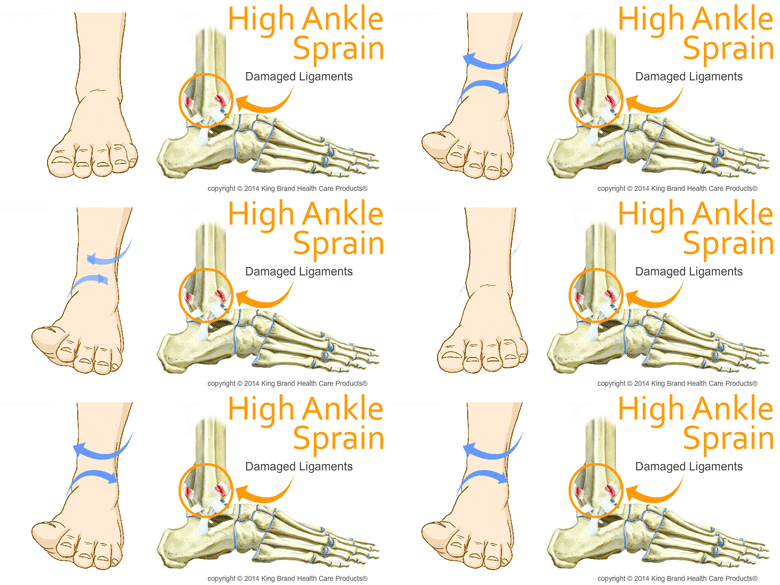
High ankle injuries involve the separation of the two bones of the lower leg- the tibia and the fibula as part of the ankle joint, but not typically just the outside of the ankle joint as occurs in a normal sprain or ankle twisting episode. These two bones (tibia and fibula) are held together by a series of ligaments and a fibrous band of tissue connecting the two bones along their length, called an interosseous membrane. Forces on the lower leg or ankle may cause the separation (or diastasis) of these two bones, stretching and tearing the ligaments and interosseous membrane.

The most typical mechanism of injury to the high ankle is for the foot to externally rotate (or turn out) on the lower leg. This may occur when an athlete pivots internally on a fixed foot; or when contact from a competitor forces the lower leg inwards on a planted foot; or from a direct blow to the lower leg or ankle forcing the foot and leg into this position. There has also been high ankle injuries reported from forced hyperdorsiflexion  (forced ankle bend) and the more typical inversion or eversion injuries of the ankle.

There is an increased incidence of these types of injuries reported in contact sports such as football and hockey (in particular ice hockey). Surfing has also been reported as a risk factor as surfers are forced into hyperdorsiflexion with a steep drop onto the wave face.

Signs and Symptoms

The typical symptoms of high ankle injuries are pain and difficulty weight bearing on the affected lower leg, and particularly pain to push off or heel raise. Dorsiflexion (ankle bend) range- particularly in weight bearing – may also be significantly painful and limited. There are several orthopaedic tests that your Physio will use to help diagnose this injury including the external rotation test, squeeze test, drawer and Cotton test . Diagnosis may then be confirmed via investigation, with the MRI the most reliable of the modalities.

Management

Typically the high ankle injury is managed by reducing inflammation and immobilising the lower leg so as to allow ligamentous repair. In more severe injuries the ligamentous damage is so significant that the high ankle remains unstable and unable to tolerate full weight bearing activity due to the separation of the bones and surgery may be required. Previously the surgical repair would involve the two bones of the lower leg being internally fixated with a screw. An alternative technique has now been developed, the TightRope Syndesmosis Repair or Athrex procedure, which involves a button like attachment of a polyethelene chord to the med tibia which is then tightened around the fibula to firmly hold the two bones in position.

If surgery is needed and not performed, there is a high risk of early Osteoarthritis in the ankle joint so it becomes important to diagnose these injuries early and follow an appropriate management pathway.

If you have experienced on-going ankle or shin symptoms related to an acute traumatic event such as an ankle sprain, make sure you come and see one of our Gold Coast Physio & Sports Health Physio’s to ensure you get the correct diagnosis and pathway of management.
Benign Paroxysmal Positional Vertigo

BPPV (Benign Paroxysmal Positional Vertigo): What Is It & How do you Fix It?

Written by Physio Helen Sibbald

Have you experienced vertigo or know someone who has? If so, you/they may have/have had BPPV (Benign Paroxysmal Positional Vertigo).

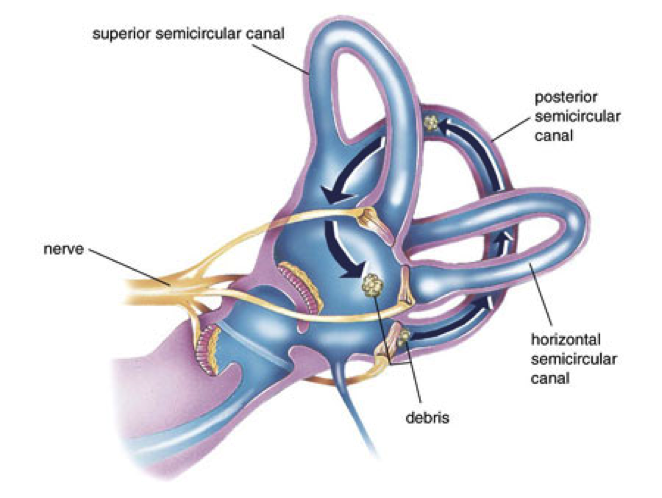
BPPV is caused by the mechanical displacement of calcium carbonate crystals in the semicircular canals of the ear. Simply put – it is an ear problem! It is an extremely common vestibular disorder.  50% of people over age of 65 with dizziness were diagnosed with BPPV. It is more common in adults and women.

The experience of BPPV can be devastating, frightening, and debilitating. Vertigo is a spinning, out of control feeling, very unpleasant. However, this is one of the easiest vestibular dysfunctions to identify and treat effectively.  There is usually an 80-90% success rate with only 1 treatment. Occasionally 2 treatments may be necessary.

What is BPPV?

You would experience brief episodes of vertigo (spinning/turning) brought on by positional changes of the head with respect to gravity. Vertigo is a specific perception of body motion – so spinning or turning. In the acute phase of BPPV, this feeling of body motion may also be accompanied by nausea, vomiting, and sweating.

You may ask, “ I feel dizzy sometimes, do I have BPPV? Well, dizziness (as apposed to vertigo) is a more non-specific term – woozy, lightheaded, giddy, feeling off – whereas vertigo is a more specific feeling of body motion. The vertigo of BPPV is severe and only happens when you change your head position in relation to gravity for example, when you look up to a high shelf (BPPV is sometimes referred to as “top shelf vertigo”); when rolling over in bed; getting out of bed; lying down to one side or the other; washing hair, at dentist or the hairdressers; looking down….You would soon learn what provokes your vertigo and start avoiding that movement. However, if you experience moderate dizziness all the time (ie: not brought on by head position change), have a tendency to fall, have weakness in arms and/legs, you may have a more serious problem requiring medical attention.

Other symptoms BPPV sufferers complain of are: poor balance; trouble walking; lightheadedness; nausea; feeling queasy; spinning inside the head; a sense of tilt; sweating; a sense of floating; blurred vision; jumping vision.

What causes BPPV?

If you are under the age of 50, then direct head injury or indirect for example a whiplash injury can cause BPPV. Over the age of 50, it could be degenerative, or an ear infection could be the cause.

What is actually happening in my ear?

We have calcium carbonate crystals in the utricle of our inner ear. The utricle may have been damaged by head injury, infection, or other disorders of the inner ear, or may have degenerated because of advanced age. A crystal then becomes dislodged and moves into the fluid in the semicircular canals of our inner ear, causing vertigo.

How would the diagnosis of BPPV be made?

Your Dr or Physio trained in assessing and managing BPPV, would do some tests: one is a test called the Dix-Hallpike test.

During this test you would be gently moved from a sitting to a lying position, with your head in a certain position. This will bring on the vertigo and the tester will be watching your eyes for nystagmus (a non voluntary rhythmic oscillation of the eyes). If you cannot tolerate this position, a gentler, side-lying test can be performed.

Helen also uses Vesticam Infrared Googles to ensure accurate diagnosis of your eye nystagmus

How would BPPV be treated?

Treatment is a simple repositioning manouevre to move the crystal through the canals back to the utricle , where they dissolve. The choice of treatment is determined by the ear canal affected and the type of BPPV, and the practitioner will watch your reaction to the test and then perform the appropriate movements on you to reposition the crystal. These movements are similar to the test, so don’t be nervous!

Home advice and exercises would be given to you to manage the condition over the next couple of days.

Recurrences do occasionally occur, you would then recognize it, not be so afraid, and perform the exercise you have been shown. In a large percentage of cases, problem resolves, if not, come in for one treatment and we would do the same repositioning manouevre.

Conclusion: BPPV can be a frightening disorder for you, the patient, but it can easily be tested for and treated.

Physio Helen Sibbald is available for consult at Runaway Bay/Labrador clinic, to book an appointment please call 07 5500 6470 or Book Online

Sports Physio Massage Pilates Podiatry
Physio Massage Pilates Sports Physio
Physio Massage Pilates Podiatry

A Summary of what Recovery really Is

Written by APA Titled Sports Physio Britt Caling with information assistance from Shona Halson (Australian Institute Of Sports Recovery Specialist)

What is “Recovery”?

* Recovery allows the restoration of physiological (body) and psychological (brain) processes so that you can:

* Compete or train again at a similar level
* Allow adaptations to training to occur
* Increase the quality and quantity of training
* Reduce the risk of developing overuse injuries and
* Reduce risk of overreaching (overtraining) & symptoms
* And is therefore essential to performance!
* The body needs to be physically stressed (through exercise) to improve fitness. However, the body actually improves when at rest (ie during recovery) as recovery counteracts the physical damage that occurs during exercise.
* Improvements in fitness occur because of rest and recovery AFTER training.
* Competition, training, study/work and social stressors all contribute to fatigue. You need to Recover from all stressors to gain the maximum benefit to performance

Recovery strategies include:

Physio Burleigh Runaway Bay Labrador Runaway Bay Miami Southport Massage* Hydrotherapy (water strategies)
* Rest and sleep
* Nutrition
* Warm-down and stretch
* Physio & Massage
* Compression Garments
* Psychological methods – ie. relaxation, mental imagery

Hydrotherapy options for Recovery:

* Contrast water therapy: alternating HOT/COLD WATER immersion
1) 1 minute in spa, 1 minute in plunge pool
* Repeat 5-7 times

2) Contrast Showers: 30 seconds warm to hot (comfortable temp), 30 seconds cold
* Repeat 3-5 times

3) Cold Water Immersion (IceBaths/ Cryotherapy)
* Accumulate 5min total time: 5min straight if possible, or 1min in:1min out x5
* Water temp <14degrees

Considerations for using Water Therapies for Recovery:

* If Fatigued: Cold Water Immersion shown to be the best. Aim for 10-12 mins in cold

* For Muscle Soreness (Delayed Onset Muscle Soreness):  Contrast water therapy shown to be the best. Aim for 15 mins in water starting and finishing on cold
* Submerging full body is important.
* Finish on cold if using hot/cold
* Pick 3-4 training sessions a week as there is a thought that too much cold water immersion may reduce normal inflammatory processes that are actually needed for tissue repair and recovery
* Do not use Cold water immersion in the 1hour prior to training/competition due to the reduction in nerve conduction velocities and possible effect on motor skills

Precautions

* DO NOT use hot/cold therapy if you have an illness (i.e. cold or virus)
* DO NOT use hot if you have an injury, open wound or bruising
* DO NOT use if you have Diarrhoea

For more thorough planning on how to individualise the use of Water Therapies to aid your recovery, talk to our Physio’s or Exercise Physiologist for full details. Phone us for an appointment on 07 5500 6470

WHY DOES MY PAIN COME BACK?

By Frederic Impens, Remedial Massage Therapist and Personal Trainer

Just because your back pain is gone and you’re able to move pain-free again, does not mean it will stay that way – you may need to train it to do so. There could be positions or daily habits that need to be changed. You will probably be fighting your “body memory”. Positive changes made in your Massage, Physio or Pilates session typically won’t translate to long term gains at first.

Proprioceptors – Enforcing “The Body Memory”

In our body there are nerve endings in our joints, muscles, ligaments and tendons that do two important jobs. We call these nerve endings proprioceptors and their job is:

1. Keeping the joint or soft tissue in its normal static position.

2. Helping with alignment, tensions and excitability in our joints and soft tissues to help with normal movement production and control patterns and give us body awareness in space.

Proprioceptors help to keep our body in its normal positions and tensions. They help our body know how to move. When our body is healthy, in good symmetry, these proprioceptors are our good friends. If we knock something out of our normal position, like changing an alignment in our spine, or straining a muscle, then the proprioceptors create a reaction to try to return us back to our normal position where we feel good again. This is why, when we strain ourselves, we often feel back to “normal” within a couple of days.

However, if our body has had some areas of abnormal tightness or misalignment of joints for a long period of time, then our body will then call the new presentation its new “normal”. Our nerve endings will adapt to being in this abnormal position. This condition will lead to compensations and other problems. Over a period of time these compensations will become our “normal” movements and postures as well. Our proprioceptors now have a new set of instructions.

Why is this a problem?

Any positive change that we try to make to the body’s alignment, tension and movement patterns will be fought by your proprioceptor’s abnormal instructions. You may have received the perfect treatment – aligning the joints in the body and relaxing tight muscles- but in a few days you could be back to where you started due to your new altered proprioceptive feedback.

How Do I Win?

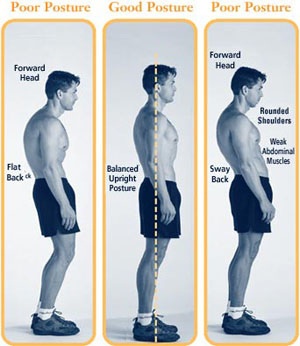
You win by first aligning everything in its neutral position. This means sitting with proper posture at your desk, not sloughing watching TV, lifting with good form. The more time the body spends in its new and better position the more these proprioceptors will be sending information to your central nervous system to keep the positive gains from your treatment.

By doing this, you are retraining the proprioceptors to return everything to their true and correct “normal” positions. Once you are in balance it should take less work to maintain.

Your GCPSH Therapist can advise you on correct posture for work, sport and daily living with education, manual treatment and exercises. Pilates is also an excellent way of resetting your proprioceptive awareness and improving your awareness of achieving and maintaining body neutral positions.

Fred is available for consult at Runaway Bay clinic, to book an appointment call us on 07 5500 6470.  

Physio Pilates Massage Gold Coast Labrador Runaway Bay Burleigh Southport
Physio massage Pilates Burleigh Runaway Bay Labrador Southport Gold Coast

Common Injuries in Gymnastics and their treatment

Common Injuries in Gymnastics and their treatment

Written by GCPSH Physio Erin Fitzgerald B.Physio{HonsIIA}, M Sport Physio 

Gymnastics is a very physically demanding sport requiring participants to generate a great deal of power through wide ranges of joint movements. As such, the pattern and type of injuries that occur tend to be unique to gymnastics and thus require special prevention and management strategies. Below are a selection of three common injuries that occur with gymnastics as well as strategies to prevent them.

Ankle

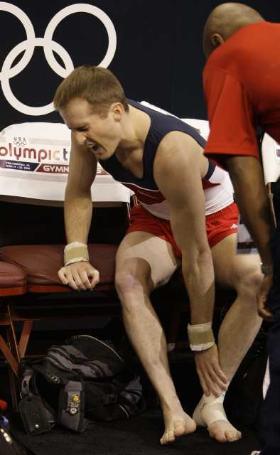
Ankle injuries are reported as being the most common injury in gymnastics and include sprains, fractures and impingement. Impingement occurs when tissue in the ankle gets pinched and creates pain because of a poorly positioned ankle joint, muscle tightness, joint instability or landing incorrectly from acrobatic skills (landing short). The good news is that ankle impingement can be prevented and treated very effectively by doing the following:-

– Stretch your calves regularly hold for 30 seconds, 3 times each calf and repeat 3 times within your gym session
– Knee to wall stretch. Gymnasts want more knee to wall range than most other athletes to correctly execute their skills.
– Rolling calf with foam roller in order to loosen tight muscles.
– Taping ankle when increasing tumbling
– Balance exercises will stabilise the ankle. Stand on one leg and try to shut your eyes. How long can you hold it for? Try to hold this position for more than 30seconds. Then make it harder by standing on a soft surface such as trampoline or balance disc.

Lower back

Gymnastics has a large flexibility requirement, particularly in the low back and lower limbs. Did you know that when your legs are too tight the low back can be affected? Flexibility, particularly in front splits can be adversely affected by growing when the long bones grow and the muscles have to catch up. So it’s actually quite normal to find that you have periods of time when your flexibility drops off. As such It is really important to measure your height every month so when you notice that you are growing you can pay special attention to isolating your stretches and making sure your technique is good particularly in splits, split leaps and arabesque.

In addition to your gym stretches you can add in some of the following stretches at home:-

-hamstring lying on your back
-hip flexor
-quad
-calf
-foam rolling
-regular massage with a massage therapist that works regularly with gymnastic/dance/acrobat athletes

If you are experiencing lower limb tightness the best thing is to not force the stretch as this can cause stress in the low back. Good technique in your stretches is as important as good technique in your gymnastic skills and should always be the number one priority.

If your front splits are getting worse and you haven’t grown in the past few months it could be the first sign that you have a back problem which causes tightening in the sciatic nerve that runs down the back of your leg. If this is the case then it’s a good time to see a Sports Physio to see the actual cause of your lack of flexibility. The back can be aggravated in gymnastics from poor flexibility, poor core stability, increased tumbling, increased dismounts, changes in strength and conditioning or poor technique. It’s always important to tell your coach if your back is getting tight so together you can pin-point what the problem is.

When your core is weak more stress goes through your back causing back pain over time. One of the reasons gymnasts need to do so much strength and conditioning is to stabilise the back properly when doing acrobatic and dynamic skills – the stronger you are the less likely you will have pain!

As well as the above stretches you can help prevent back pain by working on your core:-

-Dishes
-Leg lifts
-Leg lowers are all good core exercises that keep you strong for gymnastics.
-PILATES based exercises with a qualified instructor

Elbows

Elbows in gymnasts take a lot of strain because of the increased weight bearing while performing handstands, tumbling or doing strength and conditioning. Any moderate to severe elbow pain and/or limitation of movement that comes on by itself persisting beyond 1-2 weeks, requires a visit to the Sports Physio for assessment because of the prevalence of the condition Osteochondritis Dissecans (OCD) in gymnasts. OCD is a condition affecting the elbow where repetitive strain can cause damage to the blood vessels and joint surface of the elbow. It typically affects adolescents between the ages of 12 and 15 and can result in early retirement. The good news is that if caught early it can be treated quite effectively.  Treatment involves rests, control of inflammation, mobilisation and exercises to regain range of motion in the elbow and most importantly stability training of the upper limbs so the weight is being taken evenly and correctly through the arms.

There are things that you can do at home that may assist in preventing the condition:-

-Stretching the upper back (thoracic spine) with a foam roller or two tennis balls taped together. This will help to open up the shoulders in handstand position
-Stretch your shoulders including triceps and back of shoulder to make sure the shoulder position is correct in handstand position
-Listen to your coaches and work hard to improve your technique with handstands because this will result in less strain through the elbows
-Stretch your arms regularly

These are just a few of the common injuries that can happen in gymnastics. Please stand by for more information in upcoming newsletters.

Remember that regular massage along with stretching and strengthening and practicing good technique can prevent many injuries but if pain occurs, early diagnosis and management from a Sports Physio- and especially one who works regularly with Gymnasts- can speed up your recovery time.

Erin Fitzgerald has extensive experience in treating Gymnast, Acrobat, and Dancers and has toured as head Physio with Cirque Du Soleil.  Erin is available for consult and to make an appointment please call us on 07 5500 6470.

Sports Physio Massage Pilates Runaway Bay Burleigh Gold Coast Southport
Loading...