13/345 Southport-Nerang Rd, Ashmore Q 4214
12/110 Kortum Drive, Burleigh Heads Q 4220

Trigger Point Therapy

TRIGGER POINT THERAPY

Written by Lynne Gillogly Remedial Massage Therapist 

WHAT ARE TRIGGER POINTS?

Trigger points, or a type of muscle stiffness commonly referred to as “knots”, are the result of tiny contraction knots that develop in muscle and tissue when an area of the body is injured or overworked. A hallmark of a trigger point is something called “referred” pain. This means that trigger points typically send their pain to some other place in the body, which is why conventional treatments for the area where the pain is felt may be not effective.

WHAT CAUSES A TRIGGER POINT?

Trigger points can occur as a result of muscle trauma ( from sports and work related injuries, falls and car accidents), muscle strain from repetitive movements at work or at play, postural strain from standing or sitting improperly for long periods of time (for example, at the computer), emotional stress, anxiety, allergies, nutritional deficiencies, or part of the inflammatory response and toxins in the environment. A single event can initiate a trigger point, and you can suffer the effects for the rest of your life if that trigger point is not addressed properly.

WHY TRIGGER POINTS CAUSE TROUBLE

A Trigger point itself causes pain and discomfort. Your body’s instinctive reaction to pain or a harmful event is to protect itself. It does that by altering the way you move, sit or stand, which puts abnormal stress on your muscles, tendons, ligaments and joints. This produces strength and flexibility imbalances in your muscles, as well as postural dysfunctions throughout your body.

WHY YOU MAY BE SUFFERING

To better illustrate the process, here is an example of how one trigger point in one muscle can cause back pain, sciatica, or a herniated disc. The most common place for a trigger point is in the muscle of the lower back called the quadratus lumborum  (QL), which is a broad muscle located just above your hips on each side of your spine. Regardless of what kind of event sparks the trigger point, a trigger in your QL can gradually cause your movements and posture to become dysfunctional – that is , the QL on affected can tighten and shorten and cause further compensation and effects on your posture. And as you limit it’s use it can also weaken.

As the QL becomes increasingly dysfunctional, it will alter the position of the pelvis and ribs and spine. As the pelvis becomes dysfunctional, it will force the spine into an abnormal curvature that will put abnormal pressure on the disc between the vertebrae. Over time the disc can begin to bulge. This situation can get progressively worse, affecting your overall quality of life.

DO YOU HAVE TRIGGER POINTS?

Everyone has trigger points, the question is the degree. If you have lingering pain, tightness, or restriction  of certain movement, it is a good bet that you are experiencing the effects of a trigger point. Trigger points may produce symptoms as diverse as dizziness, earaches, sinusitis, nausea, heartburn, false heart pain, numbness in the hands and feet.

Trigger points can bring on headaches, neck and jaw pain, lower back pain, sciatica, tennis elbow, carpul tunnel syndrome – you name it. They can be the source of joint pain in the shoulder, wrist, hip, knee, and ankle that is often mistaken for arthritis, tendon pain, bursitis or ligament injury in some cases. 

GETTING RELIEF FROM TRIGGER POINT THERAPY

Trigger point therapy involves sustained pressure on the area for a set period of time, and doing this on a regular basis. As the pressure is applied the Trigger Point releases allowing the release of tension,  improved blood flow and improved flexibility in the area.

I have been incorporating Trigger Point Therapy with my massages for the last 19 years and it has proven to be very successful.  All Therapists at Gold Coast Physio & Sports Health are very experienced in the use of Trigger Point Therapy within their consults and can also teach you how to perform self-trigger-point-therapy as part of your weekly body maintenance.

Lynne Gillogly is available for consult at Burleigh clinic, booking are essential ph:- 07 5500 6470 
 

Powerbreathe for Sports Performance

Powerbreathe for Sports Performance

POWERbreathe training uses the principles of resistance training to ‘overload’ the inspiratory muscle, improving their strength, power and endurance in less than four weeks.

 The easiest 5% performance improvement you will get!

How does it work?

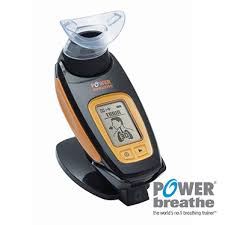
The POWERbreathe is a completely adjustable, drug free, hand held device that provides resistance to breathing.   Just as you might use weights to strengthen your arms muscles, breathing training using the POWERbreathe device makes your inspiratory muscles (the muscles we use to breathe in) work harder, increasing their strength, power and endurance. We call it ‘dumbbells for your diaphragm’.

Independent lab tests have shown that POWERbreathe training:

  • Improved cycle time trial performance by up to 4.6% equating to a massive 3min off a 40km race
  • Improved rowing time trial performance by up to 2.2% equating to 60m off  a 2km race
  • Accelerating recovery during repeated sprints by up to 7%
  • Increased swimming performance by up to 3.5%

How often do I need to use it?

Our Exercise Physiologist will test your inspiratory muscle strength, endurance whilst assessing your breathing technique. You will be prescribed a POWERbreathe training program tailored to meet help you achieve your performance goals. Training on the POWERbreathe device only takes a few minutes a day.

Why train the Inspiratory muscles

As the intensity of the exercise increases, our inspiratory muscles work harder to ensure our body and exercising muscles have an adequate supply of oxygen.  When our inspiratory muscles start to fatigue, we begin to feel breathless and our body shunts blood away from our working muscles towards our lungs (to keep us alive). Strengthening the inspiratory muscles, delays their onset of fatigue, reducing breathlessness and allowing adequate blood to supplied to our working muscles for longer.

Read more from Champion Surf Ironwoman, Harriet Brown: Breathe Better to Improve Performance

POWERbreathe Training: The easiest 5% improvement in performance you will get!

Exercise Physiologist Harriet Brown is available for consult in clinic, for bookings please call (07) 5500 6470


powerbreathe gold coast sports physio

Athlete Education & Resource Packs

Topics Available for Athlete Education

These Athlete Resource Packs and Education Consultations are provided by our Exercise Physiologists. A consultation can be booked as a standard Exercise Physiology appointment with Health Fund Rebates available, or can be booked at a discounted rate by purchasing an Exercise Test Package .  For information of Exercise Test Packages, click here.

Understanding Recovery and Best Practice Recovery Strategies

This session provides information on the latest Recovery strategies including: rest & sleep; warm-down; massage; compression garments; & hydrotherapy (water strategies including Ice-bathing and hot/cold)

Body Self Maintenance Strategies, The Role of Stretching & Aiming to Stay Injury-free

Do you know when stretching is appropriate? Learn Body self maintenance strategies such as Triggers, Self Massage, Roller Massage & the role of Physio & Massage plus information on returning to training to stay injury-free after reduced training loads.

Immune Health as an Athlete- The What and How

This session provides insight into your immunity as an athlete and what you can do to maximise your immunity to reduce lost training due to illness.

International Travel for Competition- Strategies to Assist Your Performance

Learn travel tips to allow you to perform in training and racing at international competitions- including exposure to light, hydration, sleep times, nutrition hints & body clock synchronisation.

Exercise Testing with Harriet Brown Gold Coast

Massage Therapist wanted Gold Coast

Massage Therapist wanted to join our exciting Gold Coast Team.

Is this you?

You must be passionate about providing quality Soft Tissue services to clients of all abilities, but predominantly an active & exercising population and athletes.

You Must have Qualifications to enable Health Fund claiming.

Our Team assist more than 20 local elite Olympic Sports Athletes so you must have confidence in your ability to upskill to provide a quality service to these athletes. Experience in this is not necessary as we will support your Development, but you must be enthusiastic to work with these athletes and improve your skills and client management.

Minimum 2 years of experience within the Industry is preferred and you must be able to show you are actively involved in a sport or fitness personally.

You will be required to work alongside titled Sports Physio’s (including Director Britt Caling, Australian Rio Olympics Team Headquarters & Gold Coast Commonwealth Games Team Headquarters Sports Physio) , Exercise Physiologists, other experienced Soft Tissue Therapists, Dietitian/Sports Nutrition, Sports Psychology, & Sports Medicine.

So if you want to be part of an awesome Team, engage in further learning & be challenged but enjoy your work, JOIN US!

Regular Professional Development, direction and support will be provided. More information about mygcphysio & our Goals and Values and what is provided under our employment can be found here

Permanent Employment of 24-30 hours preferred by us, but hours and the role are somewhat negotiable. Shifts would be around 6hrs with a mix of 7.30am starts & 7pm finished, but Saturday at Burleigh Clinic 8am-2pm availability is a must.

If you are keen to join our Team and you think we would love you, Email your Resume to Albie Firley (Business Manager):

AlbieFirley@www.gcphysio.robicoweb.com.au or phone the clinic on 07 5500 6470 for more information


Do you suffer from vertigo?

Do you suffer from Dizziness (Vertigo)?

By experienced Neck Physio, Helen Sibbald

If  you have Vertigo, one common cause is Benign Paroxysmal Positional Vertigo (BPPV).

Our Physiotherapist Helen Sibbald has a passion for helping people with Dizziness and she is able to diagnose and treat BPPV- and can help you return to normal function, often in often only 1 to 2 treatments.

BPPV is an extremely common disorder of vertigo induced by changes in head position. Trained Physiotherapists are able to recognise this debilitating illness, perform the diagnostic tests and successfully apply the canalith repositioning manouvres (CRM’s). Patients usually respond exceptionally quickly when this technique is used correctly.  This is essential in the elderly patient with BPPV who would have an increased risk of falls and therefore fractures.

We often also see the chronic BPPV patient who has developed secondary neck pain and stiffness or cervicogenic headaches (headaches which stem from the neck). These patients have avoided the head/neck movement that brings on the vertigo and develop neck joint stiffness, stiff/shortened neck muscles and pain as a result. They then require treatment to their neck and usually respond well to manual Physiotherapy.

Assessment of cervicogenic headaches would include a comprehensive history, manual palpation, testing of the function of various cervical muscles including the craniocervical flexion test, sensorimotor testing (joint position error, smooth pursuit neck torsion test and test of gaze stability) and assessment of balance. Treatment using manual therapy techniques, and therapeutic exercise is well researched to be of great benefit in these patients.

In clinic we use Vesticam Infrared Googles to ensure you receive an accurate diagnosis of your eye movements

To make an appointment with Physio Helen Sibbald please call our clinic on 07 5500 6470

Loading...