Do you have running goals?

We’ll keep you on track!
Our Services:-
13/345 Southport-Nerang Rd, Ashmore Q 4214
12/110 Kortum Drive, Burleigh Heads Q 4220
We’ll keep you on track!
Our Services:-

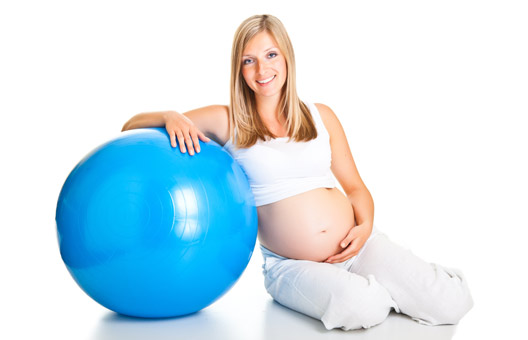
GCPSH Pilates instructor Katie Harders teaches Pre and post-natal mat Pilates, this popular and exciting class allows pregnant mums and post-natal mums to safely exercise in a small group to a personalised program.
Our classes are designed to help mums re-gain and strengthen their body and pelvic floor muscles from the inside out. The class will also assist pregnant mums to help prepare their body for the physiological changes during her pregnancy and keep her body strong for the labour process.
Program Overview:-
Not only will you gain the benefits of Pilate’s but you are committing to focusing on yourself.
Price: $120.00 for 8 week program at 1 class per week (to be paid prior to starting 8 week program) if you wish to do 2 classes per week $216 for the 8 week block.
New block of classes for 2017 commencing in January:-
Mums only class Mondays 7pm-8pm next block starting 30th January 2017
Mums and Bubs Thursday 9am-10am & 10am-11am next block starting 5th January 2017
Booking essential 07 5500-6470
Copyright: mathom / 123RF Stock Photo
Words by GCPSH Physio, Ashlee Insch
Did you also know that Incontinence is also one of the most common, but least reported conditions affecting Women in Sport- particularly high impact sports like Rugby League and Rugby Union? You are not alone!
Stress incontinence is described as leaking of small amounts of urine when there is an increase in pressure in the abdomen that pushes on the bladder. It is most common in women however there are cases in men (particularly after prostate surgery). It often occurs with running, jumping, coughing or sneezing.
Incontinence in women is typically caused by pregnancy, childbirth and menopause. During pregnancy and childbirth, the pelvic floor muscles are stretched and become weaker which subsequently reduces the support around the urethra.
During menopause the female hormone oestrogen is produced in lower quantities which affects the body’s ability to seal when using the bathroom.
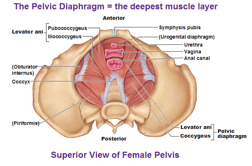
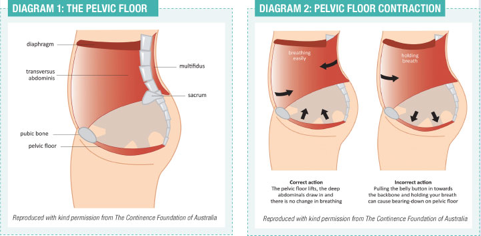
Pelvic floor muscles are the layer of muscles that support our pelvic organs and line the inside of the pelvis. If we have weaker pelvic floor muscles, we are more at risk of not controlling the release of urine, wind or faeces. Pelvic floor specific exercises are designed to help strengthen and therefore increase the support of the pelvic organs (preventing prolapse and incontinence).
These muscles stretch from the tailbone to the pubic bones at the front of the pelvis and are typically thick and very strong. Our pelvic floor muscles work with our back stabilizer muscles and therefore are a very common rehab exercises prescribed by many physios with those suffering from low back pain.
The pelvic floor muscles act like a trampoline that is able to move up and down to allow urinating, a support system when we change the pressure within our stomachs.
A few easy things to do to prevent Stress Incontinence are:
Definitely do not stick your head in the sand and pretend your leakage does not exist. Stress Incontinence can be helped, and usually very easily!
Physiotherapy Burleigh, Ashmore Physio Gold Coast Physio & Sports Health
Words by Physio Sarah Bombell B.Ex.Sc(Grif), M.Phty(Grif)
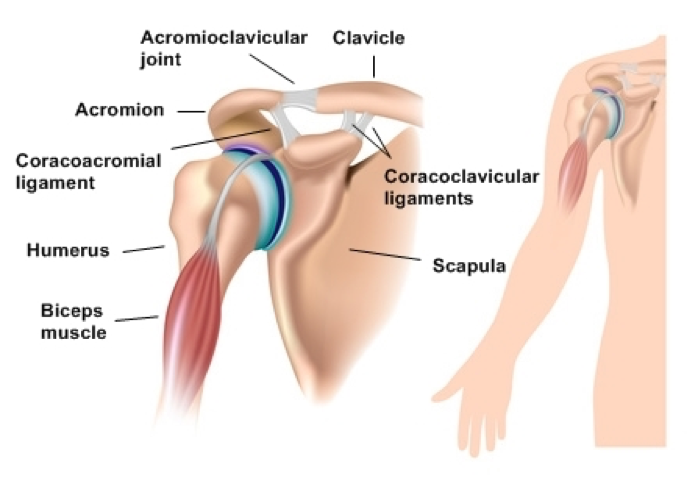
The acromioclavicular joint, or AC joint, is the small joint on top of your shoulder where your collar bone attaches. Pain arising from the AC joint can be due to an acute injury, repeated minor injuries, poor biomechanics or degenerative changes. Pathology is most common in athletes involved in contact sports or ‘overhead’ sports like swimming and throwing.
Anatomy
The AC joint is a small joint that basically anchors the shoulder blade (scapula) onto the trunk via the collar bone (clavicle). Its name referring to the bony connection between the acromion (a bony projection off the top of the scapula) and the clavicle. It has limited movement when compared to joints like the shoulder or hip, however it has been described to swing a little, rock a little, twist a little, slide a little and act like a hinge to ensure correct mechanics around the entire shoulder girdle. Like other joints in the body it is supported by ligaments and a joint capsule encasing fluid and a fibrocartilage disc.
Acute injuries
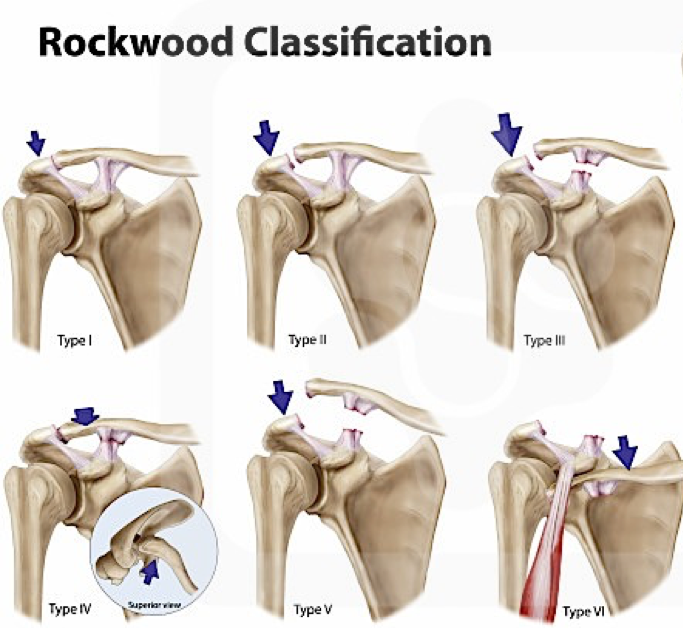
An acute injury of the AC joint occurs due a direct force or fall onto the point of the shoulder or an indirect force like a fall onto the elbow. This force will result in a sprain or tear of the ligaments and or capsule causing separation of the joint. There are various degrees of separation from mild to complete and can result in a “step deformity” of the shoulder. Treatment of acute injuries vary depending on the degree of injury but may include support with tape or a sling, rest, anti-inflammatories or operative stabilisation.
Non-traumatic AC joint pain
Non-traumatic AC joint pain is generally more difficult to diagnose and is more common than acute traumatic injuries. Non-traumatic pain in the AC joint can occur from repeated low grade sprains, repeated irritation or arthritis of the joint.
Low grade sprains are very common in contact sports like rugby where repeated heavy contact to the shoulder occurs from tackling. Management of this usually involves taping to support the joint, avoiding direct contact with the shoulder (if possible) and may need anti-inflammatories to settle.
Repeated irritation of the AC joint is a common issue that we in clinic. This occurs mostly in those individuals who do a lot of overhead activities like a builder, painter, swimmer, thrower and weightlifter. Repeated irritation will occur due to poor strength, mobility or biomechanics which results in excessive load through the joint. Management of AC joint irritation will involve addressing strength, mobility and technique to deload the joint and allow it to settle.
Arthritis of the AC joint is also quite common especially in older individuals who have a history of an AC joint injury. Management of arthritis of the AC joint will involve activity modification, mobility, strength and correcting shoulder biomechanics. The there is still pain after addressing these factors then injections or surgery may be indicated.
How do I know if I have hurt my AC joint?
If you have had a traumatic injury to the AC joint due to a fall or direct blow it is important to get a scan to determine the extent of the injury and rule out fracture. Those experiencing non-traumatic AC joint pain will be tender to press over the point of the shoulder and have pain with pushing or bringing the arm across the body.
What do I do?
An assessment by a physiotherapist is the best place to start. We are skilled at determining how and why you are experiencing pain and will provide you with exercises and a management plan to overcome the issue.
Sarah Bombell is available for consult at Runaway Bay clinic, bookings 07 5500 6470