13/345 Southport-Nerang Rd, Ashmore Q 4214
12/110 Kortum Drive, Burleigh Heads Q 4220

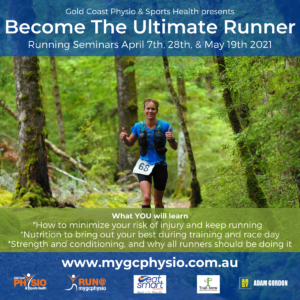
Become The Ultimate Runner

Running Seminars April 7th, 28th, and Mat 19th
Gold Coast Physio and Sports Health presents: Become the Ultimate Runner 2021
We are pleased to announce Gold Coast Physio and Sports Health will be providing a series of information seminars encompassing all things running.
Runners and endurance athletes of all ability levels will benefit from the extensive experience our team of presenters will share with you.
You will learn about:
• How to minimize your risk of injury and keep running
• Load management principles
• Nutrition to bring out your best during training and race day
• Strength and conditioning, and why all runners should be doing it
Seminars include:
• April 7th – Minimise your risk of running injuries – because not running sucks!!! (Presented by Kyle Weise – Physio and Ultra-runner)
• April 28th – Survival Nutrition: fuel your way through your next endurance event (Presented by Steff Ford – Sports Dietitian (EatSmart) & Britt Caling – Sports & Exercise & Olympic Physio and Ultra-runner)
• May 19th – Strength and Conditioning for runners: what all runners should do!!! (Adam ‘Adsy’ Gordon – Coach & PT fitness and Britt Caling)
Location: Gold Coast Physio and Sports Health – Burleigh Clinic  – Time: 6:30-7:30pm
$10 per seminar or $25 if you register for all 3 seminars

The most common training errors in running

The most common training errors in running

By Gold Coast Running Physio Kyle Weise

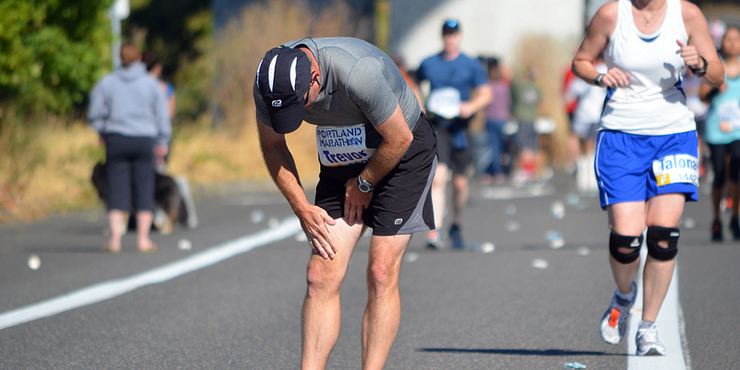
Dealing with injured runners on a daily basis allows me to develop a very clear picture of the common training errors that lead to running related injuries. There are always some very clear themes when I sit down and chat with a runner about their running prior to the current injury appearing.

When I ask a runner what they think caused their injury to occur, I generally get a few common answers:

  • “I have no idea” and
  • “I haven’t been stretching enough”.

But It’s only when we dive deeper into their training that we generally find the main causes and I’m going to go through these causes below in the hope that a few people reading this are able to be more aware of when they are making a mistake.

So What Are the Most Common Training Errors in Running?

1. Too quick of an increase in volume – Trying to make up for lost time (Returning too quickly post injury/holiday)
This is by far the most common factor we as Physio’s hear when seeing a runner for a new injury. The two most common reasons this seems to happen is: 1. Someone trying to “make up for lost time” after having a break due to either a previous injury or a holiday, or 2. Entering a race a little sooner than they should and trying to cram in as much training as they can. It is very easy to fall into the trap of running too much too quickly, but better to slowly progress your training then smashing it for a few weeks then ending up side-lined with another injury

2. Running easy runs too hard or with too much intensity
This is something I see every single day and I believe there are a couple of reasons for it: People that come into running from a gym/strength or team sport background are used to being able to push themselves to the limit on a daily basis. Now when you are at the gym and working different parts of your body each day you will get away with this as each area gets adequate recovery, however, running will in most part load the exact same structures every run and therefore pushing your body too hard every day is a recipe for disaster; Also, Beginners can get away with this as they don’t know any better, but the longer term runners who do this consistently tend to be the ones who like to impress their friends and show them just how fast they can “run easy”. Doing this does not help your long term fitness and can easily lead to excessive/unwarranted fatigue and subsequent injury.

3. Addition of hills to quicky
This one is for the trail runners. It’s something that not a lot of runners pay attention to as most runners track distance or time, however, I frequently see runners present with injuries and say how their loading has been consistent. However, when they look into their elevation change statistics, it tells a different story. Downhill and uphill running loads your body differently to running on the flat and therefore sudden changes in hill running can be a risk for anyone who has not run hills regularly. So if you are someone who is thinking of introducing hills into their running, start slow, perhaps only once per week initially and let your body adapt to the new terrain.

4. Copying the training of elite runners
We all love to follow our favourite elite athletes, however, sometimes we need reminding that these people are professionals and do this for a living. Yes, there are able to perform tremendous amounts of training but they are also able to perform tremendous amounts of recovery. Remember, you need to treat yourself as an individual and not copy someone who is at the top of their sport.

5. Not scheduling in recovery
This flows from the last point. Recovery is key to making gains from the training stimulus. If you aren’t recovering from the training you are performing then you aren’t benefitting from it. When you’re recovering from a run is when your body is adapting to the new stimulus that you have placed on it and this is where the magic happens. The last thing you want to do is head out for another run just after you have done a big long or hard run and haven’t fully recovered. Runners are general very dedicated individuals who are will to push their bodies to the limits. But it’s the ones who can hold themselves back at the right time that tend to be the long term winners.

6. Finally, a bonus mistake (and my personal favourite) – trying to impress your friends on Strava. I see this daily and trust me, it doesn’t end well!

The above informaiton only relates to training load errors & I have not discussed other external factors that may contribute to Injury, or factors that help a runner avoid injury like sleep/nutrition and strength & conditioning.

There are many more pieces to the ‘avoiding-injury-puzzle’, however, hopefully after reading this you can take away one or two key messages and start to apply the to your training. The smartest thing you can do is learn from other peoples’ mistakes and put yourself on the path to successful running.

If you are a runner who would like to sit down and discuss your running plan, or if you’re currently suffering from a running injury that you can’t seem to get on top of then you can visit me at our Ashmore clinic.

For more information or to book in for an individualised run screening that can help identify factors that will help you perform better, or be a possible injyr risk, call the clinic at anytime ph 07 5500 6470 or Book Online at www.mygcphysio.com.au

Note: Kyle leads the monday morning Run@mygcphysio Trail Run Crew and can give you tips and tricks on that run. If you would like more info on our cool Trail Run Crew, click here

Pre- & Post-Natal Remedial Massage Benefits

Pre- & Post-Natal Remedial Massage Benefits

Remedial massage during your pregnancy can help change your experience for the better, during the most amazing time in your life. Once perceived as a form of alternative therapy, remedial massage is increasingly becoming a popular way for women to reduce pregnancy discomfort.

Research has shown that this type of massage is beneficial for pregnant women as it provides a number of health benefits, including:

• Reduce prenatal anxiety: cortisol (commonly known as the stress hormone) can be reduced significantly by prenatal massage, this lets you experience good or happy hormones which are known to improve mood, vitality and immunity.
• Help improve sleep: remedial massage can help increase the production of melatonin and serotonin hormone in the body which will regulate sleep rhythms. This can improve the quality of sleep which promotes a good overall effect on the body.
• Reduce joint swelling: this is a common occurrence during pregnancy and is caused by low circulation and extra pressure on the blood vessels. Remedial massage can stimulate the soft tissues and lower the build-up of fluids in swollen joints.
• Lessen muscle pain and cramps:  a very common occurrence in pregnant women is muscle pain and cramps, due to the muscle tension and heightened motor neuron activity. Prenatal massage can help lessen and manage these common symptoms during the pregnancy.
• Reduce nerve pain: during pregnancy sciatica can arise if the growing uterus and baby put pressure on the sciatic nerve causing inflammation and pain. This is more common during the later stages of pregnancy as the baby gets bigger. Our therapists can help with management of sciatic nerve pain.

What to expect when you’re expecting from a remedial massage?

During your first trimester you may not feel like lying down for a massage especially if you are feeling nauseas. You may want to wait until this subsides, which is usually around the 12 -week mark. If you have any other medical issues, a doctor’s clearance is advised, however if you were having a regular remedial massage prior to falling pregnant then the massage will continue as normal.

In your second trimester, as your tummy starts to grow, lying on your front will become uncomfortable and a pregnancy massage pillow will be used at for Massage at Gold Coast Physio & Sports Health. And as your tummy and breasts grow you may start to notice some stiff and tight areas in your back as your posture changes. Booking a regular massage will help you manage these symptoms during the second trimester.

Into the third trimester, your body will have changed, and the aches and pains may be more noticeable particularly in your lower back, upper back and pelvic area. At this stage of pregnancy, the therapist will lay you on your side and use pillows to make you comfortable, which allows the therapist to treat all areas.

What to expect with a Post-natal Remedial Massage

With the arrival of your baby, your body will be getting used to holding and feeding whilst also healing from the birth. Post-natal Remedial massage can help reduce the aches and pains as well as improve your mental wellbeing. You may find it uncomfortable lying on your front in the first few months post -delivery, so a pillow under your chest or hips may be used.

At Gold Coast Physio and Sports Health we offer pre and post-natal remedial massage at both Ashmore and Burleigh clinics with Katie Harders and Tim Harman.

Book Online at www.mygcphysio.com.au or Call the clinic to book an appointment – 07 5500 6470


Burleigh Massage

Do My Rehab or Strength Exercises Have to Hurt When I Do Them?

By Gold Coast Physio, Liam Ryan

As a Physio, a common question we get asked is “should my exercises be hurting me to do them?”.

In society we also hear a lot “no pain, no gain”. But is this really necessary? Do we need to hurt to get better? Is there a benefit to experiencing pain with rehabilitation?

A recent review looked at the benefits of painful exercises against non-painful exercises in people who have had musculoskeletal pain for greater than three months. They compared the results of seven different trials, and found that painful exercises provided a greater benefit in the short term over non-painful exercises for a good outcome.

“Painful exercises provided a greater benefit”

We also know that in more acute injuries, such as a hamstring strain, that allowing acceptable levels of pain when doing rehab provided a greater recovery of function and strength than limiting exercises.

Now this doesn’t mean that your exercises have to cause tears to well up in your eyes. What it does mean is that low levels of acceptable pain are safe and OK to experience whilst your exercising or completing rehab. We know that pain does NOT equal tissue damage, especially when it has been there for an extended period.

“Low levels of acceptable pain are safe and OK to experience”

As to how much pain you should experience with your exercises?

That will need to be determined by yourself and your treating physiotherapist. If you decide to allow pain as part of your rehabilitation then it should be at a level that you can tolerate, and that does not cause a flare up or increase in your pain the following day. I find myself often suggesting to my clients to keep their pain under 4/10 if it were scored on a scale from 0-10 (0=normal, no pain and 10= the maximal pain you can imagine).

A good idea is to keep a diary, recording how you felt doing your rehabilitation each day. This is a useful tool for reflection on progress, and can help your treating practitioner guide your recovery & help you see some progress even if dealing with some pain.

If you would like more advice on rehab and exercies, any one of our experienced Physio’s can help. Phone us on 07 55006470 for an appointment or Book Online.

I’m Injured! How Long Until I can Train Again???

I’m Injured! How Long Until I can Train Again???

This is a question we often get asked as a Physio and believe-it-or-not, it is often difficult for us to answer! There are many factors to consider in giving you an accurate expectation including: what has happened to you (and your Diagnosis); the severity of the injuyr; your previous injury history; your age, training history & usual response to load/trainng; your compliance to rehabilitation (& following our recommendations); AND very importantly, other psychosocial factors (ie stress, social/family/coaching supports, expectaions)– and I could go on.

As a physio we use various tests and exercises to determine the severity of the injury and rehabilitation progress however, the tests or exercises we use in clinic don’t (or can’t) awlays replicate the loads of a full training schedule.

So what can we do to help an athlete get back to their chosen sport and avoid re-injury?

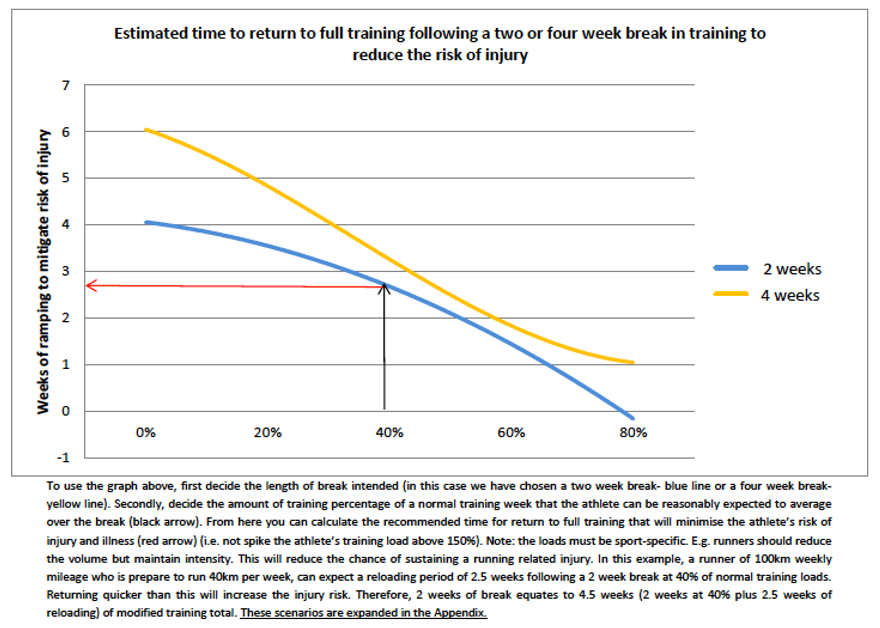
Recent research shows us that a progressive return to training load is the key to reaching your goals and preventing re-injury.

The Time taken to return to normal training loads should be proportional to the length of rest period and training load percentage (if any) during the time off. Jumping back in straight away would be like trying to build a house starting at the top floor, and wondering why it’s not holding up. Build a base, first.

The graph above demonstrates the relationship between training at a decreased load (due to injury/illness) and the recommended time to return to full (unrestricted) training in runners. You can calculate the recommended time to return to training based on the length of training break and the (estimated) percentage of normal training completed during the break. In the example above a runner following two weeks at 40% training load can expect 2.5 weeks of reloading to minimize injury risk. Therefore a two-week break equates to 4.5 weeks of modified training total.

This is where you and your physio (in communication with your Coach or Trainer) should work together to devise a training plan that allows you to train at optimal levels and progress without risking further injury. By taking into account all the factors surrounding your injury, training style and competition commitments we are able to help you achieve a great outcome!

On the positive, whilst it can be frustrating taking time off training or having an injury, it is also a great opportunity to work on technique and other aspects of your sport that might be lagging behind & that you have been putting off working on because you are too busy training!!!

If you’re finding it hard to gain momentum with your injury and you keep hurting yourself in a particular aspect of training, talk to your physio, get a plan in place and start ticking off your goals!

Book Online for an apppointment with one of our experienced Sports & Exercise Physio’s who will understand and help you with this at www.mygcphysio.com.au or call the clinic 07 5500 6470.


gold coast physio for knee injuries

Will an MRI tell me why I have Back Pain?

Will an MRI tell me why I have Back Pain?

By APA Sports & Exercise and Musculoskeletal Physio, Rick Bain


Wouldn’t you love to have xray vision?

To look deep inside someone’s anatomy & skin & diagnose their problem(s) immediately, with amazing accuracy?

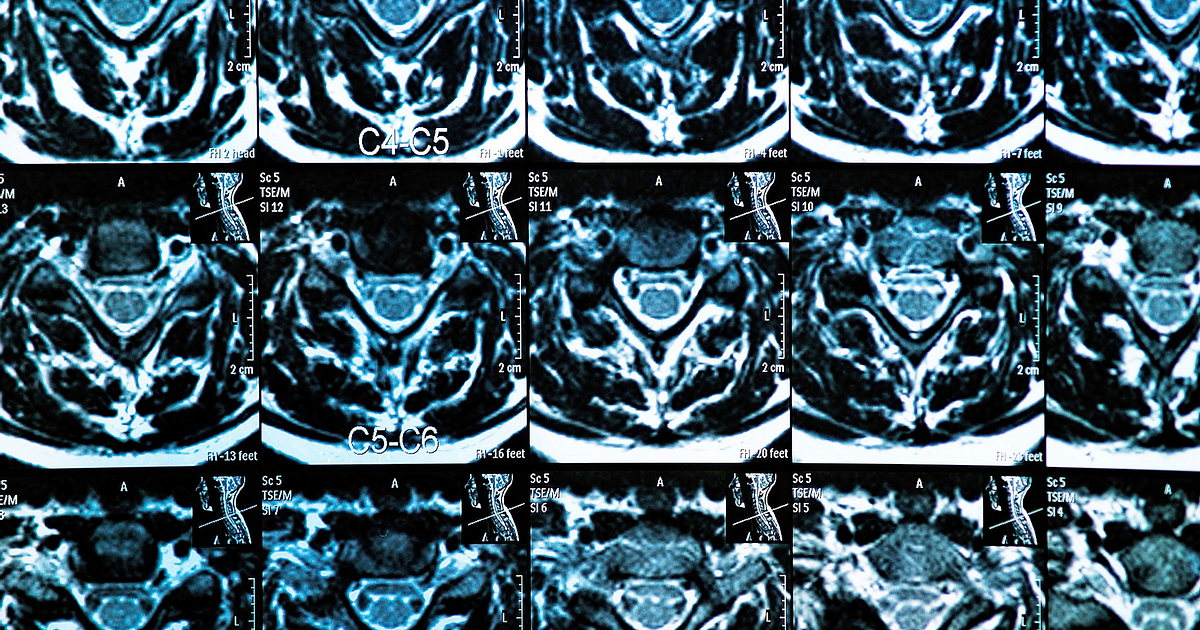
It is a lovely thought; however, we all live in the ‘real world’. As physio’s, we have a love-hate relationship with imaging (Xray, MRI, CTscan, Bonescan, Ultrasound and more) when it comes to back pain. Primarily because they produce ‘false-alarms’.

MRI is an amazing technology, providing clear visualisation of the body’s tissues. This can be invaluable in the right situations. However, with great power, comes great responsibility; and its power is not being wielded appropriately when it comes to low back pain.

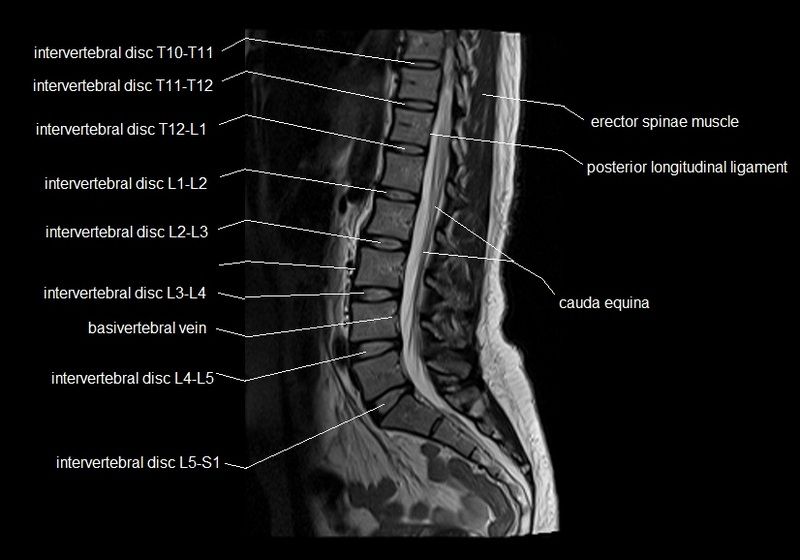
We all generally accept more and more wrinkles as we get older. But just like the wrinkles on the outside, we also get ‘wrinkles’ on the inside in the form of degenerative changes of our discs and joints. In fact, our spines usually look worse on scans than they are.

Research after research has demonstrated a high percentage of “problems” on spinal MRI in people without symptoms. For example, one such study reported 30% of 20-year olds and 60% of 50-year olds have “disc bulging”, and 37% of 20-year olds and 80% of 50-year olds have “disc degeneration” in people without any symptoms.

So, what we have learnt is that Diagnosing someone’s low back pain mainly on imaging findings is usually misleading.

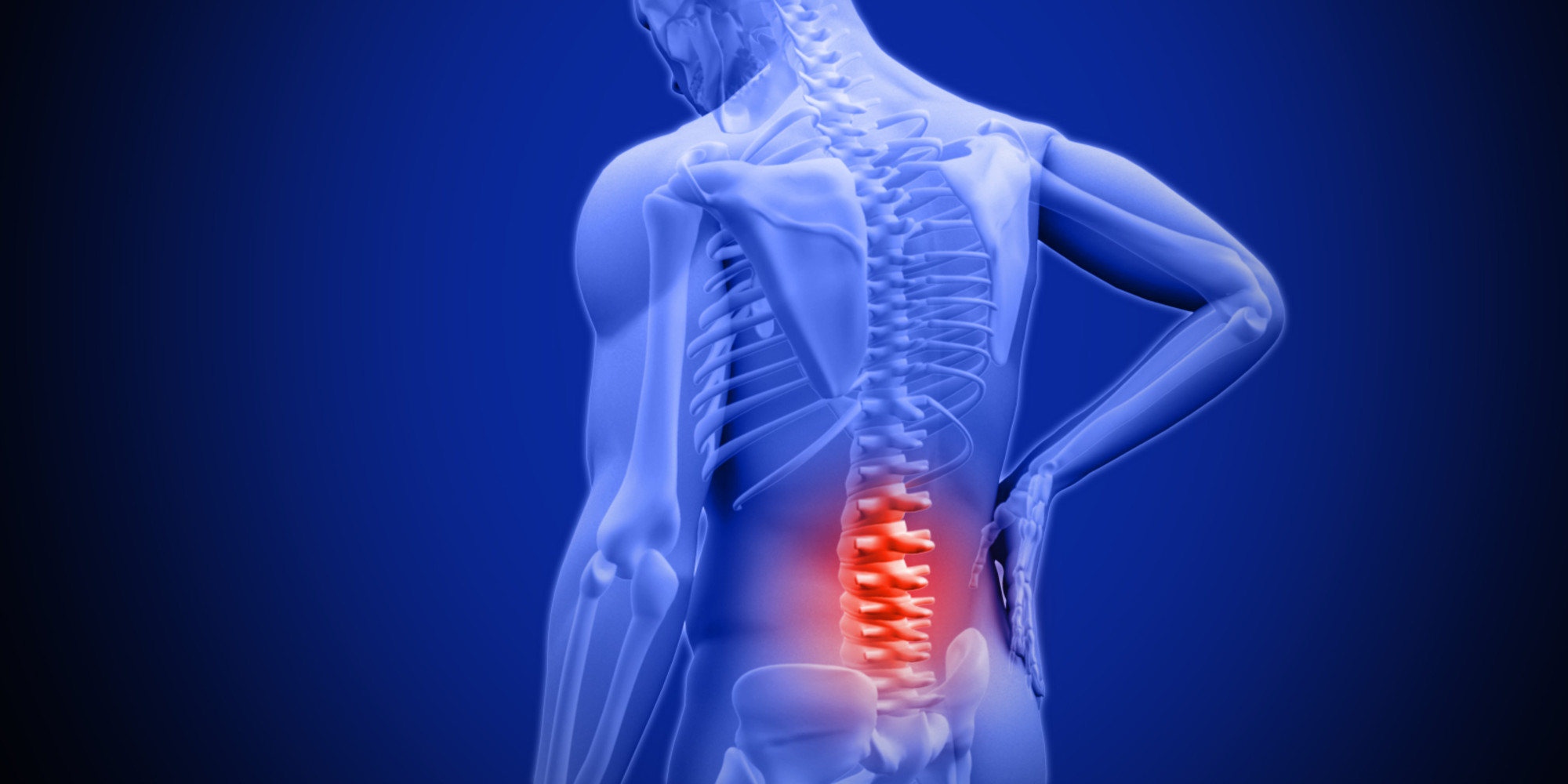
Low back pain is extremely multifactorial, and the ‘wrinkles’ found on MRI imaging are only one small piece of the low back pain puzzle. Factors such as activity levels, weight, lifestyle, mental health, even whether you smoke or not, are known to be much more important factors impacting low back pain than those horrible sounding, yet often innocuous findings on MRI.

Physio’s have long understood that you simply cannot reliably diagnose low back pain with MRI in isolation, and the ‘false alarms’ they produce can often do more harm than good. Sounds scary to be told “you have disc bulging or degeneration at L3,4 levels”, right? Unless this fits with the person’s clinical picture, these “false alarms” may lead to stress/anxiety, fear of movement and activity, and longer-term reduced mobility and deconditioning, leading some people into a cycle of low back pain.

This is not a new issue.

Clinical guidelines for the management of low back pain produced by the American College of Physicians and American Pain Society in 2007 stated that “it is strongly recommended that Physicians avoid using MRI and Xray for low back pain unless it is ‘really rather bad’”. ‘Really rather bad’ refers to persistent and severe neurological symptoms, spinal cord involvement, or non-musculoskeletal causes such as cancer. In these situations, MRI can be an absolute blessing.

This same message has been published and re-published in clinical guidelines ever since. Clearly it is a slow message to get through. When we see clients presenting to us in clinic with acute low back pain, and their GP or other health professional has performed premature imaging, it can be a hard sell to educate them on the relevance of their scan. Especially when they have been provided a diagnosis by their GP based on imaging findings by a radiologist who interprets imaging without the context of the client presentation, so without knowing your symptoms and testing your presentation and what you can/can’t do. There are only few occasions when early imaging helps the initial stages of low back pain management.

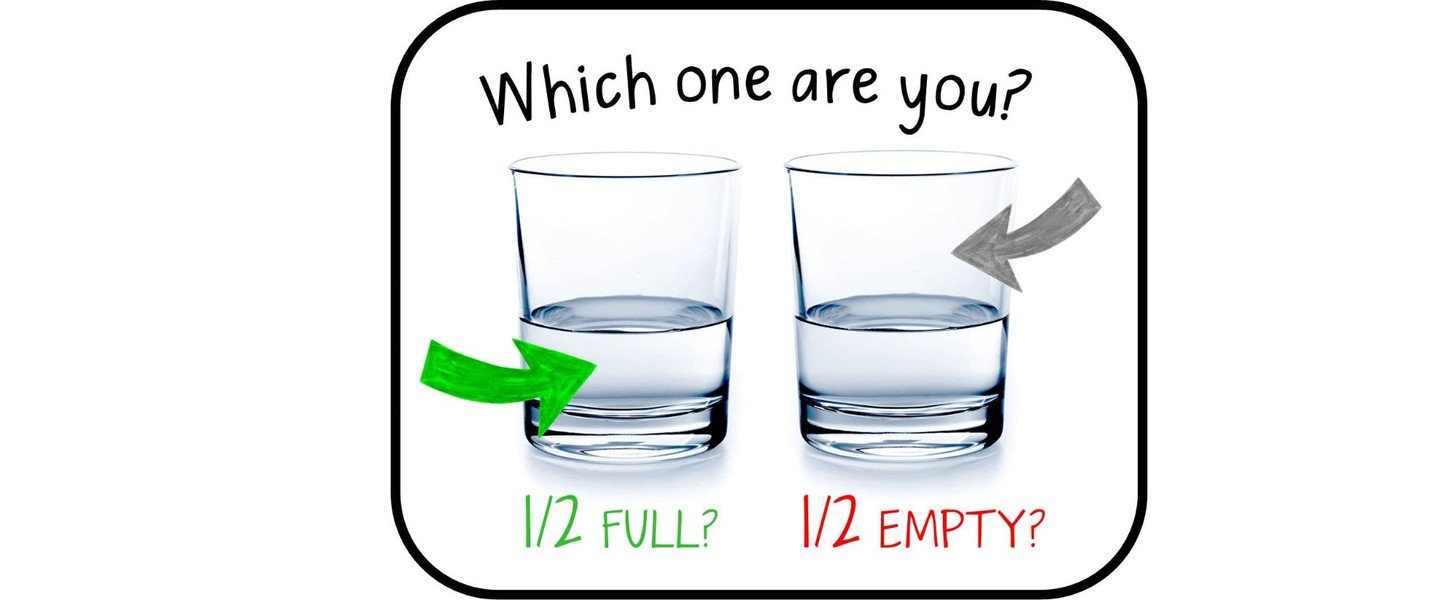
Are you a ‘glass half empty or half full’ person?

Here is a test. When your physio tells you, “Your scan does not assist in diagnosis”, do you think “nobody can tell me what’s wrong with me”, “OMG, I have degeneration, I wont be able to work ever again”;

OR, do you think “I’m happy to hear that my MRI shows no concerning changes and what was reported by the radiologist are just normal findings in most scans”?

Your ability to understand the true nature of your low back pain and to trust in the rehabilitation pathway & guidance provided by your Physio is greatly impacted by whether you are a ‘glass half full or half empty’ kind of person.

If you are not sure whether you require or warrant further imaging, our physiotherapists are well placed to assess and help guide you. If you have recent MRI’s for your low back pain and feel this article challenges everything you (thought) knew about the results, feel free to consult with us and we will be happy to shed unbiased, accurate light on your individual scenario.

Phone 07 55006470 or Book Online for an appointment with our experienced Gold Coast Physio Team.

Loading...