13/345 Southport-Nerang Rd, Ashmore Q 4214
12/110 Kortum Drive, Burleigh Heads Q 4220

How can an Exercise Physiologist or Exercise & Sports Scientist Help?

Accredited Exercise Physiologists (AEPs) hold a four-year university degree and are allied health professionals who provide exercise and lifestyle therapies for the prevention and management of chronic disease, injury and disability.

AEPs provide:

  • Exercise Testing for both Competitive Athletes and their Coaches to maximise the effectiveness of a training program
  • Exercise Testing for clients just beginning to Exercise to ensure appropriate exercise levels
  • Exercise Testing to help you understand your metabolism and help with weight loss
  • Support for clients with conditions such as cardiovascular disease, diabetes, osteoporosis, mental health problems, cancer, arthritis, pulmonary disease and more
  • Gym and Exercise specific progrmas

AEPs are eligible to register with Medicare Australia, the Department of Veterans’ Affairs and WorkCover and are recognised by most private health insurers.

Many AEP’s are Exercise and Sports scientists and specialise in an area of performance management. They help individual athletes and teams to improve their sporting performance through the use of scientific knowledge, methods and applications.

An Exercise Physiologist can act as a Exercise & Sports Scientist and can help you or your team by:

  • create an exercise or strength & conditioning program that helps you achieve your fitness goals
  • instruct you in the right way to do the exercises
  • monitor your progress and adapt the program so you continue to improve
  • monitoring training load
  • analysing skills and techniques
  • providing biomechanical analysis for injury prevention or to improve performance
  • liaising with other members of the support team to optimise performance
  • keeping you up to date with the latest techniques in performance management

You might see an AEP to help you:

  • carry out sub-maximal and maximal fitness tests;
  • perform body composition tests
  • perform musculoskeletal assessments
  • provide lifestyle education to help people manage their health conditions
  • provide training in safe manual handling
  • overcome persisting pain caused by injury or overuse
  • improve your heart health
  • rehabilitate following a cardiac event
  • control your diabetes or prevent pre-diabetes from progressing to full diabetes
  • improve your recovery following cancer treatment
  • improve your general health and wellbeing.

An Exercise Physiologist is NOT a Personal Trainer:

AEPs are allied-health professionals with a 4year university degree and have Medicare Provider numbers. They are trained members of the health and medical sector. Fitness professionals (e.g. personal trainers) are members of the sport and recreation sector.
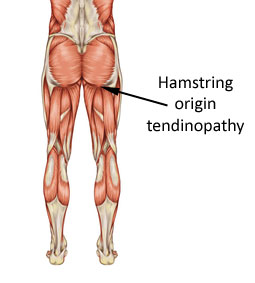
Proximal Hamstring Tendinopathy

Proximal Hamstring Tendinopathy – a pain in the Butt!

By APA Sports & Exercise Physio, Rick Bain

With the number of running events around these days, there is almost always one to do just around the corner. And for most runners, training starts to get serious leading in to any longer events, like the Gold Coast Marathon.  If you talk to any runners, whether they are  or a weekend warrior, it is not uncommon to hear stories of shin splints, plantar fasciitis (foot pain) and knee pain when training increases.

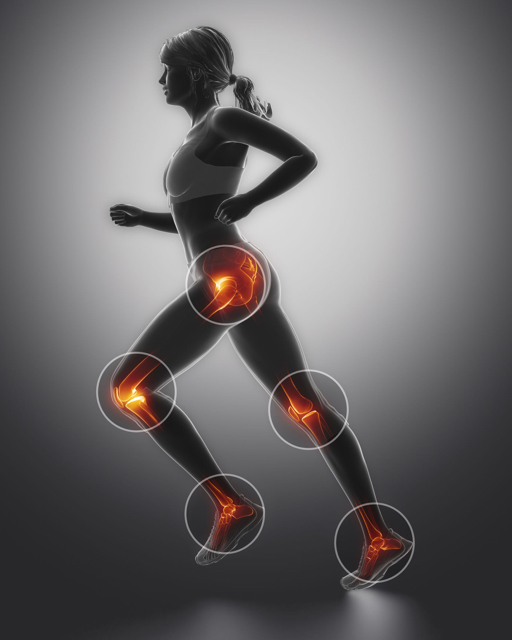
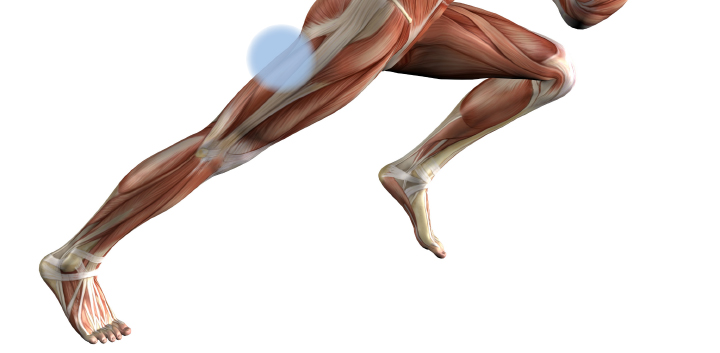
But one condition that is less talked about is Proximal Hamstring Tendinopathy (PHT).  PHT is the medical term used to describe symptoms related to the common origin of the hamstring muscles as they insert on to the sitting bones of the pelvis, which is why PHT is quite literally a pain in the butt!

A recent review of running related musculoskeletal injuries rated PHT as 9th out of the 21 most common running related injuries. It will affect 1 in 8 runners at some stage (Lopes, 2012).  Middle and long distance runners are far more likely to develop this condition than any other athlete.

Symptoms are often described as a vague, deep buttock pain (around the area of the sitting bone or deep in the buttock) most commonly in the absence of any specific episode of injury. It is initially aggravated by running but can soon progress to affecting sitting, driving and stretching.   The repetitive nature of distance running means the load on the hamstrings is experienced in much larger volumes than most other sports.  Pain in the proximal hamstrings can hinder your stride and affect your ability to run smoothly and run at all.

There are numerous possible causes of buttock pain in runners such as bursitis or lumbar spine/nerve pain, among others; and several of these conditions can be found coexisting with PHT in an athlete.

This often makes buttock pain a challenge to diagnose and treat effectively by your Physio.  The key to effective management of PHT is not only treating the symptoms of buttock pain, but identifying and addressing the underlying contributing factors that lead to the onset of the condition.

So why does it affect so many runners?

There are a few common aspects of running technique that can contribute to the development of PHT:

  1. Over-striding:
    • During the running cycle, the hamstring muscles are under maximum strain immediately prior to the foot landing.  Over-striding creates excessive tensile and compressive stress on the hamstrings.
  2. Poor hip drive:
    • Good knee lift through the swing phase means the hamstrings don’t contribute much to propel the body forward.  Runners with poor hip drive will utilise their hamstrings more to help generate forward momentum by ‘pushing’ off there ground, thereby leading to excessive hamstring loading.
  3. Excessive pelvic rotation/shifting:
    • Hamstrings work with your gluteal muscles in stance phase (when your foot is in contact with the ground) to prevent any unnecessary and inefficient trunk and pelvic motion.  Gluteal muscle weakness or fatigue, leg or spinal imbalances, and pelvic/leg joint restrictions can potentially create excessive pelvic and trunk motion leading to the hamstrings working under more load to help control this motion.

A great way to address all of the above is with exercises specific to running and the weaknesses in your running technique.  This exact reason is why here at mygcphysio we have developed and conduct a regular Run Technique Clinic.

Our Run Technique clinic is accessible to every runner of all levels from beginners to experienced athletes and is for those athletes that are currently injured, those who have had a long-term recurrent injury or something that doesn’t feel “quite right” in their technique, and also to those athletes who are uninjured but want techniques cues to improve their efficiency and performance, or just those wanting running to feel ‘easier’. Click here for more details.

What can I do if I already have PHT?

Effective treatment of PHT is first based on understanding the stage of the tendinopathy (i.e. the stage of pathology that the tendon is undergoing).  Clues in the behaviour of symptoms and a thorough physical examination can help an experienced Sports Physio understand the stage of the tendinopathy and therefore develop an appropriate rehabilitation program that is individual to you.

The rehabilitation process will often include a combination of manual therapy techniques and specific exercises in the initial stages to reduce pain and ensure optimal lumbar spine and pelvic mechanics.  The most important aspect of the rehabilitation process is a graded strengthening program to increase the hamstring’s ability to withstand the rigours of distance running.  Together with a lumbo-pelvic stabilising program and improving your running technique, this rehabilitation process ensures the best chance of a successful return to running and prevention of recurrence in the future.

PHT is a relatively common complaint amongst distance runners but it can be prevented and treated.  If you suffer from ‘a pain in the butt’ then why not come in and see one of our Sports Physio’s who will help you ‘get to the bottom of it’ (pun intended).

Rick Bain is a Titled Sports & Musculoskeletal Physio and is available for consult in clinic, for appointments please call us on 07 5500 6470 

Rick is also one of our Physio consultants to the Australian Institute Of Sport Gold Coast facility & an official QAS Physio Provider.

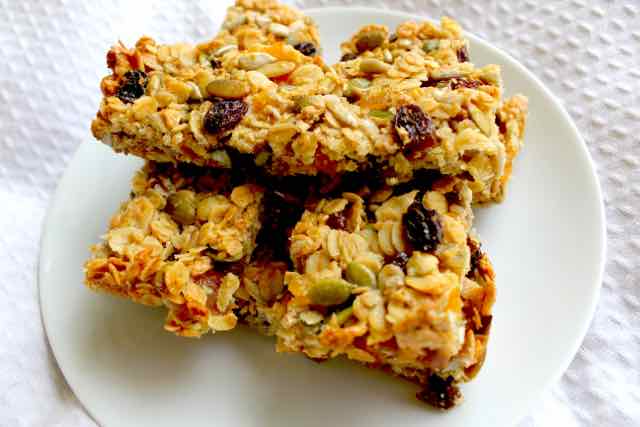
Performance Muesli Bars

PERMORMANCE MUESLI BARS

Recipe by Marika Day- Accredited Practising Dietitian

Ingredients you will need:-

2 cups sultanas
1 cup water
1 cup chopped pecans
2 tablespoons margarine
2 teaspoons vanilla essence
2 large eggs
2 teaspoons baking powder
2 cups quick oats
1 cup wholemeal self-raising flour 2 tablespoons maple syrup

Follow these simple baking instructions:-

1      Place the sultanas and water in a small saucepan over a medium heat and simmer until the sultanas plump up. Add the pecans and allow to cool.
2      Pre-heat oven to 180 degrees C and spray/grease a slice tin.
3      Beat together the margarine, vanilla and egg. Add the baking powder and beat well. Add the oats and flour.
4      Mix until all the dry ingredients are combined.
5      Stir in the cooled sultana and nut mixture. Add the syrup.
6      Press into the tin and bake for 30 minutes, or until golden brown. When cool cut into small slices.

And the most important part… train hard and eat well!
Marika Day is available for consult at Burleigh & Runaway bay clinics, for an appointment please call 07 5500 6470

What is “Recovery”?

Recovery is needed to compete at Your Best – but what really IS Recovery?

Written by Sports Physio, Britt Caling with content from AIS Recovery Specialist, Shona Halson

What is “Recovery”?

Recovery allows the restoration of physiological (body) and psychological (brain) processes so that you can:

  • Compete or train again at a similar level
  • Allow adaptations to training to occur
  • Increase the quality and quantity of training
  • Reduce the risk of developing overuse injuries and
  • Reduce risk of overreaching (overtraining)g & symptoms
  • And is therefore essential to performance!

 
The body needs to be physically stressed (through exercise) to improve fitness. However, the body actually improves when at rest (ie during recovery) as recovery counteracts the physical damage that occurs during exercise.

Improvements in fitness occur because of rest and recovery AFTER training.

  • Competition, training, study/work and social stressors all contribute to fatigue. You need to Recover from all stressors to gain the maximum benefit to performance

Recovery strategies include:

  • Hydrotherapy (water strategies)
  • Rest and sleep
  • Nutrition
  • Warm-down and stretch
  • Physio & Massage
  • Compression Garments
  • Psychological methods – ie. relaxation, mental imagery

Hydrotherapy options for Recovery

1.Contrast water therapy: alternating HOT/COLD WATER immersion

1 minute in spa, 1 minute in plunge pool Repeat 5-7 times

2.Contrast Showers: 30 seconds warm to hot (comfortable temp), 30 seconds cold

Repeat 3-5 times

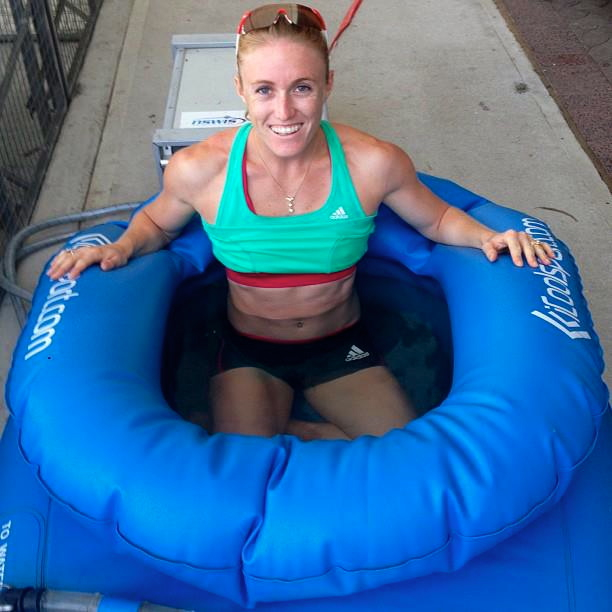
3.Cold Water Immersion (IceBaths/ Cryotherapy)

  • Accumulate 5min total time: 5min straight if possible, or 1min in:1min out x5
  • Water temp <14degrees

Considerations for using Water Therapies for Recovery:

  • If Fatigued: Cold Water Immersion shown to be the best. Aim for 10-12 mins in cold
  • For Muscle Soreness (Delayed Onset Muscle Soreness):  Contrast water therapy shown to be the best. Aim for 15 mins in water starting and finishing on cold
  • Submerging full body is important.
  • Finish on cold if using hot/cold
  • Pick 3-4 training sessions a week as there is a thought that too much cold water immersion may reduce normal inflammatory processes that are actually needed for tissue repair and recovery
  • Do not use Cold water immersion in the 1hour prior to training/competition due to the reduction in nerve conduction velocities and possible effect on motor skills
  • Precautions
    • DO NOT use hot/cold therapy if you have an illness (i.e. cold or virus)
    • Do NOT use hot if you have an injury, open wound or bruising
    • DO NOT use if you have Diarrhoea

For more thorough planning on how to individualise the use of Water Therapies to aid your recovery, talk to our Physio’s or Exercise Physiologist for full details. Phone us for an appointment on 07 5500 6470.

The above strategies are great as an assist to training if you have access to facilities, but one of the simplest and key factors to assist your recovery can be done in your own home, and that is: ensuring you get enough rest and relaxation.

Some key points about Sleep:

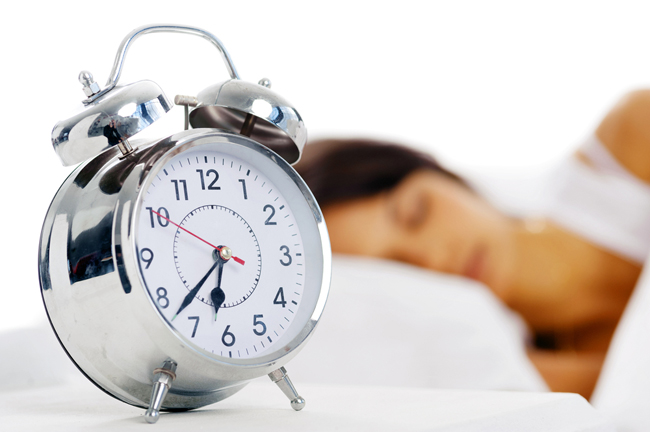
—  Sleep is when maximal physical and psychological restoration occurs

—  Sleep loss may be related to the development of overreaching & overtraining and:

◦       increases the onset and/or magnitude of pain perceptions

◦       decreased focus and concentration

◦       causes difficulty in determining why errors are made

◦       causes confusion remembering instructions and facts

The Importance of Sleep

No matter what sport you do, these above factors are not great for helping you perform and improve, therefore it is essential you get optimal sleep and relaxation for good performance and repeat performance in training.

Did you know?

Your sleep perception (how you felt you slept) is just as important as how much sleep you actually have for recovery and performance.

Just as we wash our hands to ensure we reduce our risk of picking-up bugs that can make us sick, there are some things we can do to help ensure we have good quality of sleep. These factors are about good “sleep hygiene”.

Sleep Hygiene refers to strategies to ensure you get good sleep and include:

—  * Maintain a regular sleep-wake cycle (i.e. going to bed and getting up at the same time of the day)

—  * Use napping appropriately (naps should not interfere with night-time sleep and should be less than 1hr)

—  * Plan fluid/food intake so you are comfortable to go to sleep and so that you don’t wake too many times at night to use the bathroom

—  * Do not use your bed for work or watching television

—  * Ensure bed is comfortable and the room temperature is appropriate (19-21°C is often recommended)

—  * Avoid thinking, planning or other mental activities. You will need to work out what strategies work for you to help this (ie. use a notebook to write your thoughts down before sleep)

—  * Avoid things which may reduce sleep:

—  * Caffeine

—  * Alcohol

—Hyper-hydration: In a recent survey of AIS athletes, frequent waking to go to the bathroom was one of the major reasons for sleep disturbance and may be related to a large consumption of fluid with minimal amounts of sodium in the time between finishing training/competition and bed-time

If you are having trouble with Sleep and Relaxation, try a Consult with our Sport Psychologist Abra Garfield. Alternatively, Ruth Anderson  from MiND HQ has also developed a relaxation iPhone app, designed to provide athletes with all the tools required to manage stress and tolerate anxiety to perform under pressure.

Relaxation HQ provides:

  • All the information you need to understand & effectively manage stress
  • CoA checklist to identity your signs of stress
  • A personalised relaxation plan
  • The ability to monitor your relaxation response
  • Four relaxation audio tracks and information to train you in relaxation skills

For more information, click here or phone us on 07 5500 6470

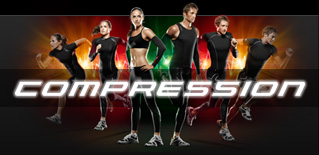
Compression Clothing

So what is all the fuss really about? What is compression clothing? and What do I use compression garments for?

Compression garments are a relatively new tool for athletes and research is currently being undertaken to determine all the true benefits.

What they seem to do is help both performance and recovery by:

◦       Improving athletic performance by maintaining repeated jump performance – great for sports like AFL where repeated jumps in a game are crucial for keeping possession of the ball

◦       Reducing muscle movement and vibration and focus the direction of the muscle-  excellent for distance running or activities where there is a repeated movement pattern over-and-over again in order to reduce muscle fatigue from the vibrations and reduce the metabolic cost of running

◦       Maintaining body temperature and moisture wicking – particularly useful for keeping the body warm in colder environments and helping the body during warm-up.  Surprisingly, the moisture-wicking ability allows these garments to evaporate sweat and also helps keep the athlete cool in hotter environments.

◦       Assisting in the athlete’s psychological recovery from repeated bouts of exercise compared to passive recovery – obviously useful to perform well when the athlete needs to back-up in multiple games (ie. duirng Touch Footy carnivals) or for multiple events (ie. Swimming championships)

◦       Reducing the time taken for muscles to repair themselves by altering muscle metabolites and swelling produced during exercise and also reducing muscle soreness during post workout recovery following eccentric (muscle lengthening) exercise – almost every competitive sports involves eccentric muscle contractions so this suggests compression garments are excellent for helping muscles recover to a more normal state, and faster, following sport

◦       They may also be an alternative to Compression stockings worn during long flights to reduce the risk of Deep Vein Thrombosis (DVT) caused by pooling of blood in the lower legs

◦       They provide support to help keep male genitalia in place, are great under short skirts (such as womens hockey) to avoid exposing underwear and help reduce chaffe between the legs when running.

Compression garments can be worn between training sessions/games, during training, at night or during long-haul flights.

At Gold Coast Physio & Sports Health we stock BSc and 2XU compression.  Both companies are Australian and produce garments of exceptional quality.


Hydration in Sport & Exercise

Hydration in Sport & Exercise – words by Marika Day

Dietitian B. Hlth Sci (Nut) & M Diet St, APD


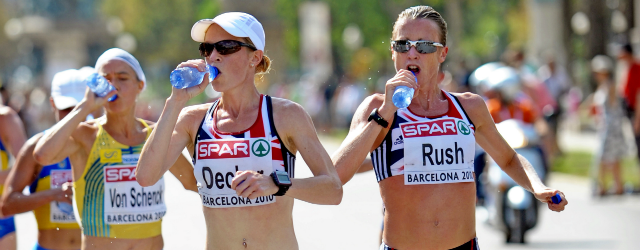
Hydration is key to optimizing performance during exercise whether it is for competition, training or recreational sport. During exercise the body maintains body temperature though sweating. Sweat production increases with increased exercise intensity, temperature and humidity. If adequate fluids are not consumed to replace fluid losses from sweat, dehydration can occur. Fluid requirements vary between individuals and exercise situations and can be affected by genetics, body size, fitness, exercise intensity and the environment. The most practical way to monitor sweat loss is to measure weight loss during a session.

How does dehydration affect my performance?

As dehydration increases there is a reduction in both physical and mental performance. Studies have shown that fluid losses equal to 2% of body mass are sufficient to cause a decrease in performance. Dehydration can lead to:

  • Loss of coordination
  • Inability to regulate body temperature
  • Fatigue and tiredness
  • Reduced concentration
  • Reduced reaction time
  • Muscle cramps
  • Increased perception of effort

Tips for staying hydrated

Drinking fluid before, during and after exercise helps to prevent dehydration. The amount and type of fluid will depend on the individual and the sport

  • Begin each exercise session well hydrated: drink water regularly throughout the day leading up to training
  • Aim for a pale-yellow colour urine
  • Immediately before exercise consume 200-600mL fluid
  • Develop a plan for fluid intake for all exercise sessions longer than 30 minutes
  • Begin drinking early in exercise sessions and continue to sip regularly

What to drink?

Water is effective for rehydration and fluid replacement in low intensity and short duration sports. Exercise that involves longer durations or higher intensity may require fluids which contain carbohydrate and electrolytes to enhance performance.

Get a personalised hydration plan that’s right for your body by booking an appointment with Markia, available for consultation at Burleigh & Runaway Bay clinics, for appointments please call the clinic on  07 5500 6470  

Loading...