Caffeine is the world’s most widely consumed psychoactive drug (stimulant of the central nervous system) and is classified by the Food and Drug Administration as ‘generally recognised as safe’ [GRAS]. It wasn’t until 2004 that athletes were given the all clear from the World Anti-Doping Agency [WADA] that they could consume caffeine within their usual diets without having to worry about gaining permission.
Within Australia, the Australian Institute of Sport (AIS) use a supplementation program that details approved substances that are safe to be used by our athletes. Currently caffeine is considered a GROUP A class supplement and has been thoroughly tested and has shown important, scientific evidence with significant ergogenic effect (performance-enhancing).
What is an ergogenic aid?
Caffeine is classified as an ‘ergogenic aid’ in that a particular substance causes a direct ergogenic (work-enhancing) effect on performance, through a pharmacological rather than physiological effect. For example, a physiological supplement would be what we regard as a dietary supplement like sports gels, drinks, bars, liquid meals, multivitamin/minerals, iron supplements etc. These supplements or special foods help an athlete achieve recognised nutritional goals and are useful in providing nutrients that are difficult or impractical to obtain from normal foods ( in special circumstances). Whereas an ergogenic aid generally contains nutrients or dietary components in amounts in excess of the usual dietary intake like bicarbonate, caffeine, Creatine, Beta-alanine and beetroot juice/nitrates. These particular substances have clear scientific evidence to support its use and are considered a GROUP A class on the AIS Supplement Program.
How does Caffeine work?
The benefits of caffeine and performance still remain unclear; however, the most popular theory is that caffeine blocks the action of adenosine on its receptor, which blocks the onset of drowsiness induced by adenosine. Research has shown that caffeine can decrease perceived exertion therefore to reduce the feelings of fatigue during an event/race/session. It produces increased fast and clearer flow of thought, increased focus and increased muscle contractility for better general body coordination. There were initial studies that suggested caffeine could improve endurance performance by increasing the use of fats from adipose tissue and the muscle ‘sparing’ muscle glycogen (helping for energy reserves). However, follow-up studies have suggested that this isn’t necessarily the case.
Benefits on performance:
The effectiveness of caffeine will be different for each and every one of you. Caffeine affects vary based on the amount ingested, the frequency of consumption, the individuals metabolism and the type of training being undertaken. A lot of people don’t realise that it takes the body 45 minutes for 99% of the caffeine to be absorbed and the half-life for caffeine is anywhere from 4 to 6 hours on average, which explains why the average energy drink or coffee’s effect lasts about 4 to 6 hours. We also have 3 levels of sensitivity to caffeine. This also determines how well you metabolize caffeine and to what degree its stimulating properties affect you.
Types of exercise that caffeine has shown to be effective:
- short-duration high intensity events/efforts (approximately 1-5mins)
- high intensity aerobic training/events (20-60mins)
- endurance events (90+ mins continuous)
- ultra-endurance events (4 hours + )
- prolonged intermittent high intensity (team and racquet sports)
How much caffeine do you need?
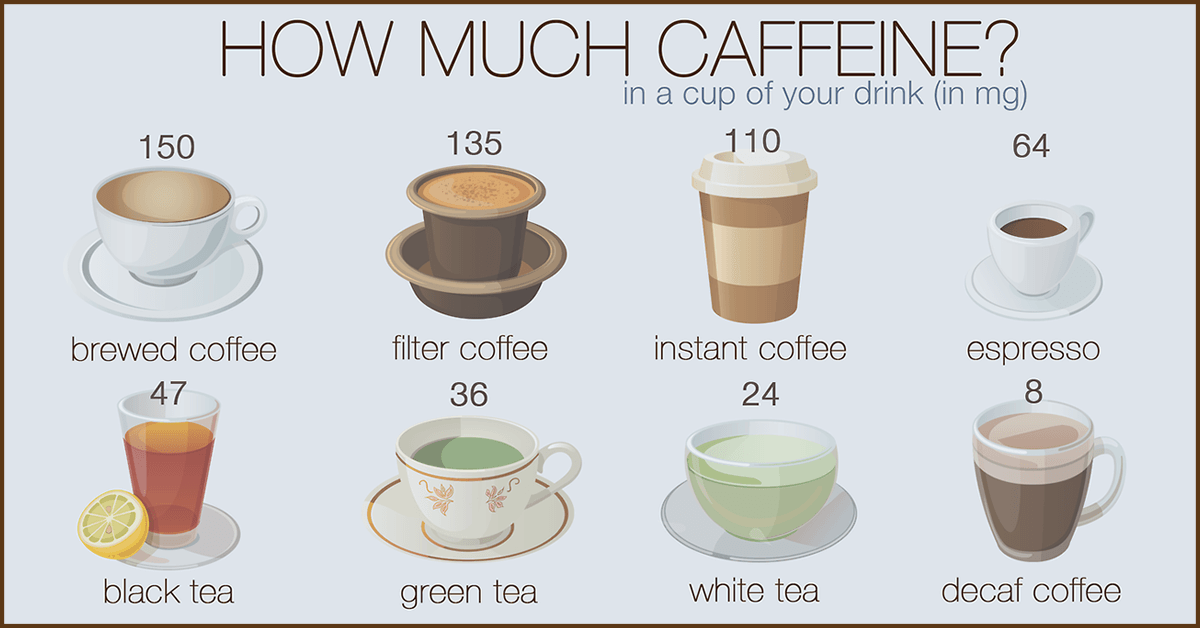
Caffeine can be found in leaves and the nuts and seeds of various plants. We predominantly consume caffeine in the form of teas, coffees, cocoa (i.e. chocolate), some cola-type soft drinks and energy drinks/shots. The average cup of coffee can range from 60-120mg of caffeine, tea with slightly less with 10-50mg and your average cola-type drinks 30-45mg. One surprising high caffeinated drinks on the market at the moment are the iced coffee with some having up to 170-180mg per serve! However, toxic doses of caffeine, over 10grams for an adult, can be extremely harmful to the body, which equates to ~50-100 ordinary cups of coffee in a day.
For caffeine usage in exercise a regular coffee may do the trick for some but the dosage amount required for an ergogenic aid response can be alittle higher depending on the person’s weight.
Protocol:
- 1-3mg/kg if tolerated and trialled in training
- 1 hr before
- Timing protocol during race not standardised (perhaps every 2 hours)
- Peak concentration is reached at approximately 3-4hr (ergogenic effect lasts up to 6hr)
The caffeine source may be in the form of tablets, coffee/tea, some types of gum, cola drinks, and some caffeine containing sports drinks, some sports bars and some gels. Make sure you’ve tried the type of caffeine source you intend to use in the race during training. Recent research has suggested that caffeine in gum form is absorbed more quickly than that from tablets etc. NOTE: Athletes should work with their accredited sports dietitian to determine lowest effective doses to avoid any negative side effects of caffeine use.
Possible side effects of having too much caffeine?
Although caffeine has proven to be an effective ergogenic aid, you can have too much caffeine that could negatively affect your performance. Too much caffeine can impair fine motor controls (think getting the shakes really bad or trying to thread a needle with string); it can increase your heart rate (increase perceived rate of exertion if you have too much); increase anxiety levels (not great if you are already nervous before an event); disturb sleep (which you need to aid recovery and performance); and could lead to gastrointestinal upsets (bowel issues such as diarrhoea, pains, bloating, discomfort- not what you want before a training session or race).
Questions that need to be asked before any substance/s are consumed:
- Is it safe?
- Is it legal?
- Is it effective?
The use of caffeine by adolescents and children competing in sports is not advised, particularly in very humid and hot conditions.
If you would like to trial caffeine for your sessions or sports please contact one of our accredited sport dietitian to help develop a strategy. Casey Evans is at both Gold Coast Physio & Sports Health clinics, phone 07 5500 6470.